This post appeared in "The Commons," January 4, 2012
CHRISTMAS BIRD COUNT - A Citizen Science Project
On a cold Saturday in December, cars crept along the dirt roads of Windham County. Periodically they disgorged their occupants. Bundled against the cold, these people then craned necks as they studied the tree tops. They peered into thickets, stared at corn fields, and searched ponds and rivers. They were doing the Christmas Bird Count.
 |
| Black-capped Chickadee |
|
It was the 112th Annual Christmas Bird Count (CBC). Sponsored by Cornell Lab of Ornithology and National Audubon Society, the CBC engages over 60,000 people in citizen science between December 14 and January 5. They count birds in over 2200 areas in 107 countries. Most of these areas are in North America where early winter weather can vary in any location from the delightful to the gosh-awful.
It all started in 1900. Back then it was customary for the “gentry” to choose teams and spend a day out-of-doors shooting at anything and everything that moved. The winning team was the one which could produce the most dead birds (or any other animals) at the end of the day. Frank Chapman thought there might be an alternative for this time of wildlife slaughter; he organized a Christmas bird count. Chapman was Curator of Birds at the American Museum of Natural History, editor of Bird-Lore magazine, and a founder of National Audubon Society.
The first CBC involved 27 people in 25 locations. 36 species were reported from Pacific Grove, California, the largest list of birds. Chapman himself had the second largest list; he reported eighteen species from Englewood, New Jersey. Today, the species count from Pacific Grove exceeds 170 species, and from Englewood the count exceeds 70 species. Last year in the United States, 646 species were tallied on CBCs, plus an additional 45 field-identifiable forms.
 |
| American Redstart - first record for Brattleboro Area CBC |
The first CBC in the Brattleboro area was done in 1903. Eight species were reported: Downy Woodpecker, 2; chickadee (presumably the Black-capped), 18; Red-breasted Nuthatch, 1; White-breasted Nuthatch, 8; Brown Creeper 4; Golden-crowned Kinglet, 4; White-throated Sparrow, 2; and American Tree Sparrow, 2.
The Brattleboro area did not participate again until 1948 when sixteen species were reported. In 1949, fourteen species were reported, and in 1953, eighteen species. The regular participation of Brattleboro area bird watchers in the CBC did not begin until 1963, but since then (with the exception of 1965 and 1969), Brattleboro area has participated every year. During the 1960s, the Brattleboro area averaged 30 birds. The average has increased steadily in the decades since: 1970s, 34; 1980s, 39; 1990s, 40. Since 2000, the average has been 56. This year at the end of the count day, the species tally for Brattleboro was 56. In nearby Bellows Falls, 64 species were observed.
The increase in the number of species can be accounted for, in part, by the growing popularity of bird watching and by the increased skill of the watchers. More skilled birders are going to find more species of birds.
 |
| Canada Geese on Retreat Meadows |
But there are also other factors which account for the growing number of species being seen. All of the early Brattleboro counts were virtually lacking in waterfowl. Not until the early 1990s do ducks and geese begin to appear regularly. The most significant change in the records are for Canada Geese. Wildlife management and protection programs have been so successful that the population of the Canada Goose has burgeoned, to the point where some birders now refer to these geese as “pond starlings.”
Waterfowl need open water. When freezing temperatures come early and close the waters of the Retreat Meadows and Connecticut River, the number and variety of waterfowl is low. The lack of waterfowl reports from the mid-1960s through the 1980s suggests that during these years December was colder and winter came early. This year, with open water, there were over 500 Canada Geese counted in the Brattleboro area and over 1000 in Bellows Falls.
Through early December, many people remarked about the lack of birds at their feeders. The Brattleboro CBC confirmed this. The number of traditional feeder birds, such as chickadees and nuthatches was lower, but not unusually so. These birds were not seen at feeders. On several occasions, I heard a low chip. I “phished” loud and long, and soon the chickadees hurried over to investigate, along with companions such as Downy Woodpecker, a nuthatch or Tree Sparrow or cardinal.
 |
| Dark-eyed Junco |
On one occasion, the forest floor was alive with the movement of Dark-eyed Juncos. I eventually wrote down 60 juncos, but the number could easily have been 2 or 3 times that. They were feeding in the leaf litter. They were not ground scratching around bird feeders. The same was true for goldfinches. Our team saw several significant flocks, feeding in trees and fields, but only a rare goldfinch or two at a feeder. Often as we searched thickets, we remarked on the number of fruits and berries on trees, bushes, and vines. In other words, it appears that there is plenty of natural food available, so the “feeder” birds do not have to visit feeders so often, or at all.
While it often seemed that we had to search hard for birds to count, by the end of the day our count numbers were within the expected ranges. There were a couple of exceptions. Brattleboro CBC did not record a single Wild Turkey, but then, why should the turkeys come out of the woods if there is plenty of food in the woods? (It was recorded during count week.) Junco and goldfinch numbers were the highest recorded on a Brattleboro CBC. Bellows Falls also recorded unusually high numbers for these species.
 |
| Snowy Owl - first record for Brattleboro area CBC |
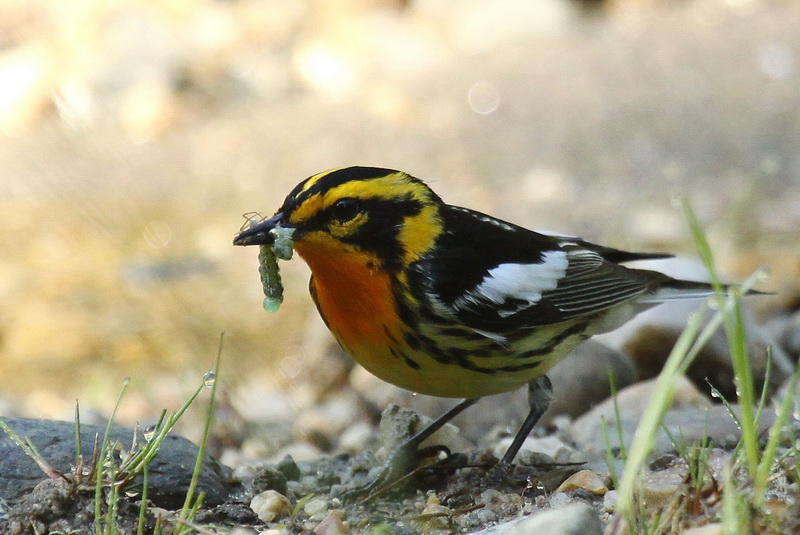
An exciting aspect of the CBC are the first sightings that occasionally occur. This year Brattleboro had two. The Snowy Owl which was first seen near the West River in Brattleboro on December 2, and later photographed December 11 atop the chimney of New England Youth Theater, stayed around for a sighting during the count week, a first record. Also recorded on the count day was an American Redstart, juvenile or female, visiting a feeder in Brattleboro.
A scientist might describe the data collection of the citizens on a CBC as a bit “loosy-goosy.” The counting is often imprecise guess-timates. Nevertheless, the CBC gives a snapshot of what is where and from accumulated data over a span of years, patterns emerge.
For example, the northward expansion and established year-round presence of southern species is evident in the CBC records: Northern Cardinal, Tufted Titmouse, Northern Mockingbird, and Carolina Wren.
 |
| Red-bellied Woodpecker |
The Red-bellied Woodpecker was recorded sporadically is the mid to late 1990s. The first recorded nesting in Vermont occurred in Brattleboro in 2001. In the Brattleboro area there has been a slow but steady increase in the number and distribution of this southern woodpecker during the last ten years and that is reflected in the CBC numbers.
The Bald Eagle, absent on CBCs prior to 2002, is now consistently observed. The breeding pair in the vicinity of the Vernon Dam have open water through the winter in which to fish, and remain on territory. With a pair now nesting north of Bellows Falls, the eagle is also being recorded regularly on the CBC in that area.
The Common Raven was silent 50 years ago in the West River Valley and surrounding hills. It reappeared on CBCs in the early 80s; the presence of the resident ravens is dependably heard in their “cur-ruk, cur-ruk.”
 |
| Eastern Bluebird |
Eastern Bluebird was absent from the Brattleboro CBC until 1992. Since 1998, this species has been recorded every year on the count, and this year the Brattleboro CBC counted a record number. The bluebird is not common during the winter, but no one should be surprised to see a bluebird during any month.
Finally - American Robin. People are often surprised to see the robin in winter. Don’t be. They are present on the CBC every year. Bellows Falls had a record number at 602. Brattleboro counted 99, not a record, but close to it. The robin may be seen during any month of the year.
For all readers worried about a lack of birds at the bird feeders, I say, “Don’t be.” The CBC suggests that the birds are still around, but there is plenty of natural food available. I’m sure they will be back. Except when humans really screw up the environment, the birds are resilient and adaptable. Their population numbers go through regular and natural fluctuations. Once the counters on a CBC thaw out and examine the count numbers, this is confirmed (for most species) year after year.
Stay warm, and if the birds don’t come to your feeders, go out and look for them. Good birding!!