Monday, August 02, 2010
Saturday, July 31, 2010
The Bonaventure Gannet Colony
Last month, I tried to describe the Northern Gannet nesting colony on Bonaventure Island in the Gulf of St. Lawrence, off shore from Perce at the eastern tip of the Gaspe Peninsula in Quebec. The colony is the largest in the world. An estimated 62,000 pairs nest on the small island. Plus, there are many younger birds that have not yet paired. When writing the column, I could find no words adequate to the visual and sensual experience - the sight, sound, and smell of so many birds in one place.
Since my visit to the island, I have learned more about the Northern Gannet, the largest seabird in the North Atlantic. The impact on the bird from European contact makes the current nesting colony on Bonaventure even more remarkable. In 1534, the European explorer, Jacques Cartier, gave this account of the nesting islands off the Labrador coast: “These islands were as full of birds as any medow is of grasse, which there do makes their nests.”
The cold waters of the Gulf of St. Lawrence were premier fishing grounds. Cod fishermen needed bait. Gangly and awkward on land, the gannets were easy prey. Hundreds could be killed in a short time for this purpose. They were also easily chased from their nests, and the single large egg gathered for food.
Even so, three centuries after Cartier’s account, John James Audubon in 1833 was so overwhelmed by the sight of so many birds nesting on the Labrador island known as Bird Rock that he could not even offer an estimated number. A naturalist visiting the island in 1860 found the numbers reduced, but still estimated the colony on the top at 100,000 and along the cliffs at 50,000.
Then the reports begin to tell a different story. Arthur Cleveland Bent in his “Life History” reports that in 1872, three years after the lighthouse was built, the colony on the summit was reduced to 5,000. “In 1887 the total number of gannets nesting on Bird Rock was estimated at 10,000, and at the time of our visit in 1904 we estimated that their numbers had been reduced to less than 3,000 birds. Fortunately, they are now protected by the lighthouse keeper ...”
Bent continues: “Though not so well known as Bird Rock, the island of Bonaventure ... is fully as important as a breeding resort for gannets, for it contains by far the largest colony of these birds on the American coast.” In 1913 the colony contained about 7,000 gannets.
Since that time, protection to birds in general has been provided through national laws and international treaties. Protection to the critical nesting colonies has come from dedicated stewards, such as lighthouse keepers, and through concerted efforts by government authorities. Bonaventure Island is a Quebec national park, accessible to thousands of visitors each year, while carefully protecting these magnificent seabirds.
When breeding, the Northern Gannet practices a site fidelity, which means that the same pair returns to the same nest year after year. If one of the pair fails to return, the returning bird will find a new mate.
The nest is simple; to our eyes they all look the same, but the birds know which one they used the previous year. Each year they return to the nest, adding fresh eel grass, seaweeds, sticks, and even green grass. As the nest is remodeled with new materials it grows in size.
From one viewing angle at the gannet colony on Bonaventure Island, the nests on the top of the cliffs were in clearly distinguishable rows, and evenly spaced. They looked as though they had been laid out with the precision of a Roman town planner insisting on his neat grids, the houses crowded together with fastidious precision. That's about the way gannets do it. Their nest is about 18-24 inches in diameter and less than 3 feet from their neighbor. It makes for crowded urban conditions, aggravated by a decided lack of neighborliness among the birds. With so little distance between one another, each pair jealously protects its space. I saw numerous confrontations as one pair angrily thrust at their neighbors with open beaks, and aggressive complaints. Their neighbors returned insults in kind.
It is no wonder that confrontations are frequent. Within the tiny piece of real estate, a pair conducts their elaborate courtship dance. Though only one egg is laid, they copulate often. When a mate returns to the nest - gracelessly crash landing - they go through an elaborate greeting ritual. It all takes place on a very small piece of real estate. Bent provides a description: “The birds stand face to face, the wings slightly raised and opened, the tail elevated and spread. They bow towards each other, then raise their heads and wave their bills as though they were whetting these powerful instruments, or as if they were performing the polite preliminaries of a fencing bout. From time to time this process is interrupted as they bow to each other and appear to caress each other as each dips its pale-blue bill and cream-colored head first to one side and then to the other of its mate’s snowy breast. With unabated enthusiasm and ardor the various actions of this curious and loving dance are repeated again and again, and often continue for several minutes. After the dance the pair preen themselves and each other.”
Thousands of people visit the gannet colony on Bonaventure Island each year, but the birds have no concern with the human voyeurs and go unmolested, except for the occasional researcher. I watched a young man standing at the edge of the colony making notes on a clipboard. He was collecting some kind of data. What I could not understand was why he was pointing a large, multi-colored water pistol at the colony. When he passed me on the path, I asked him. With the water pistol, he squirted a bird sitting on a nest. The bird stood. He could see if there was egg and make note. The bird sat again. For all of the sophisticated technology used in research today, sometimes a child’s toy and a clipboard will do the trick.
The gannet colony on Bonaventure Island was impressive and inspirational, a conservation and recovery success story. But, when they finish nesting, many of these gannets will migrate to the Gulf of Mexico for the winter months. Many young gannets will spend their first two or three years in those waters. For years to come, researchers will be studying the impact of the environmental disaster in the Gulf of Mexico on an island in the cold waters of the Gulf of St. Lawrence.
Since my visit to the island, I have learned more about the Northern Gannet, the largest seabird in the North Atlantic. The impact on the bird from European contact makes the current nesting colony on Bonaventure even more remarkable. In 1534, the European explorer, Jacques Cartier, gave this account of the nesting islands off the Labrador coast: “These islands were as full of birds as any medow is of grasse, which there do makes their nests.”
The cold waters of the Gulf of St. Lawrence were premier fishing grounds. Cod fishermen needed bait. Gangly and awkward on land, the gannets were easy prey. Hundreds could be killed in a short time for this purpose. They were also easily chased from their nests, and the single large egg gathered for food.
Even so, three centuries after Cartier’s account, John James Audubon in 1833 was so overwhelmed by the sight of so many birds nesting on the Labrador island known as Bird Rock that he could not even offer an estimated number. A naturalist visiting the island in 1860 found the numbers reduced, but still estimated the colony on the top at 100,000 and along the cliffs at 50,000.
Then the reports begin to tell a different story. Arthur Cleveland Bent in his “Life History” reports that in 1872, three years after the lighthouse was built, the colony on the summit was reduced to 5,000. “In 1887 the total number of gannets nesting on Bird Rock was estimated at 10,000, and at the time of our visit in 1904 we estimated that their numbers had been reduced to less than 3,000 birds. Fortunately, they are now protected by the lighthouse keeper ...”
Bent continues: “Though not so well known as Bird Rock, the island of Bonaventure ... is fully as important as a breeding resort for gannets, for it contains by far the largest colony of these birds on the American coast.” In 1913 the colony contained about 7,000 gannets.
Since that time, protection to birds in general has been provided through national laws and international treaties. Protection to the critical nesting colonies has come from dedicated stewards, such as lighthouse keepers, and through concerted efforts by government authorities. Bonaventure Island is a Quebec national park, accessible to thousands of visitors each year, while carefully protecting these magnificent seabirds.
When breeding, the Northern Gannet practices a site fidelity, which means that the same pair returns to the same nest year after year. If one of the pair fails to return, the returning bird will find a new mate.
The nest is simple; to our eyes they all look the same, but the birds know which one they used the previous year. Each year they return to the nest, adding fresh eel grass, seaweeds, sticks, and even green grass. As the nest is remodeled with new materials it grows in size.
From one viewing angle at the gannet colony on Bonaventure Island, the nests on the top of the cliffs were in clearly distinguishable rows, and evenly spaced. They looked as though they had been laid out with the precision of a Roman town planner insisting on his neat grids, the houses crowded together with fastidious precision. That's about the way gannets do it. Their nest is about 18-24 inches in diameter and less than 3 feet from their neighbor. It makes for crowded urban conditions, aggravated by a decided lack of neighborliness among the birds. With so little distance between one another, each pair jealously protects its space. I saw numerous confrontations as one pair angrily thrust at their neighbors with open beaks, and aggressive complaints. Their neighbors returned insults in kind.
It is no wonder that confrontations are frequent. Within the tiny piece of real estate, a pair conducts their elaborate courtship dance. Though only one egg is laid, they copulate often. When a mate returns to the nest - gracelessly crash landing - they go through an elaborate greeting ritual. It all takes place on a very small piece of real estate. Bent provides a description: “The birds stand face to face, the wings slightly raised and opened, the tail elevated and spread. They bow towards each other, then raise their heads and wave their bills as though they were whetting these powerful instruments, or as if they were performing the polite preliminaries of a fencing bout. From time to time this process is interrupted as they bow to each other and appear to caress each other as each dips its pale-blue bill and cream-colored head first to one side and then to the other of its mate’s snowy breast. With unabated enthusiasm and ardor the various actions of this curious and loving dance are repeated again and again, and often continue for several minutes. After the dance the pair preen themselves and each other.”
Thousands of people visit the gannet colony on Bonaventure Island each year, but the birds have no concern with the human voyeurs and go unmolested, except for the occasional researcher. I watched a young man standing at the edge of the colony making notes on a clipboard. He was collecting some kind of data. What I could not understand was why he was pointing a large, multi-colored water pistol at the colony. When he passed me on the path, I asked him. With the water pistol, he squirted a bird sitting on a nest. The bird stood. He could see if there was egg and make note. The bird sat again. For all of the sophisticated technology used in research today, sometimes a child’s toy and a clipboard will do the trick.
The gannet colony on Bonaventure Island was impressive and inspirational, a conservation and recovery success story. But, when they finish nesting, many of these gannets will migrate to the Gulf of Mexico for the winter months. Many young gannets will spend their first two or three years in those waters. For years to come, researchers will be studying the impact of the environmental disaster in the Gulf of Mexico on an island in the cold waters of the Gulf of St. Lawrence.
Thursday, July 29, 2010
The Next Generation
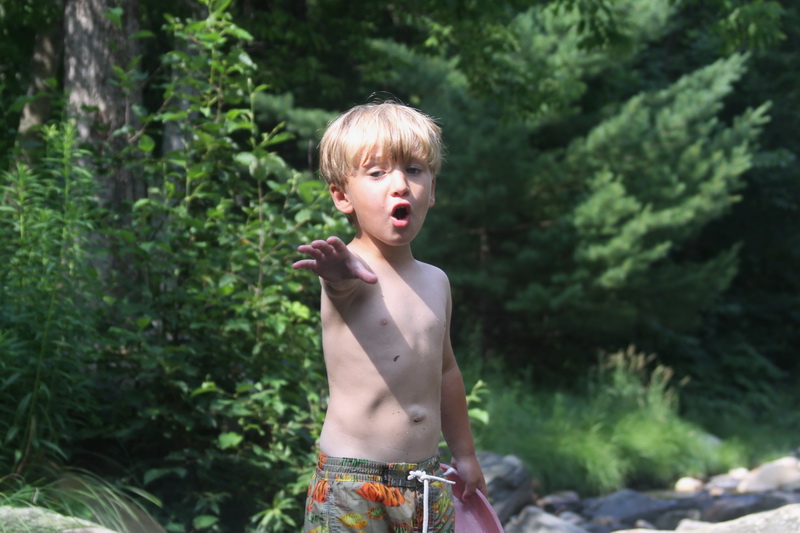
Raising the next generation requires a lot of work. I was reminded just how much work is required when our five grandchildren came for a week (sans parents). They left ten days ago, but I am still recovering.
But no complaints - they are great kids - bright, creative, funny (all evidence for how important a good gene pool is!) - and cute.
... or in Julius' case (10), handsome ...

Celia (7) ...
Oliver (4) ...
Adam (7) ...
Zachary (3 1/2) ...
But no complaints - they are great kids - bright, creative, funny (all evidence for how important a good gene pool is!) - and cute.
... or in Julius' case (10), handsome ...
Celia (7) ...
Oliver (4) ...
Adam (7) ...
Zachary (3 1/2) ...
Wednesday, July 28, 2010
More from the Backyard
Sunday, July 25, 2010
In my most recent column, posted on Saturday, I wrote about the loons on a nearby mountain lake which killed an intruding loon. A reader saw the incident and sent me this email:
“We were on [the lake in late] June and saw the loons attack the lone loon. At first we thought it was a loon acting hurt to lead us away from a nest area. But I caught it on video and saw them kill the lone loon ... It was brutal and quick, the killing. They are such powerful birds. They came very close to us after the attack; it was a little unnerving.”
Saturday, July 24, 2010
The Call of the Loon
Last summer, Common Loons nested for the first time ever on a small mountain lake not far from my home. The pair which claimed the lake as their own returned this year, nested and hatched a pair of chicks. They are now in the midst of the long process of raising their young: feeding them, teaching them to dive and fish and fend for themselves ... and protecting them from the dangers present even on a peaceful mountain lake.
The loon is an icon of the northern wilderness, a sign of clean water and undisturbed forest. Its song contributes to its iconic symbolism - eerie, haunting, mysterious - suggestive of unseen spirits.
A few years ago, the Common Loon was seriously endangered by development along the shores of lakes, by acid rain and industrial pollution, and even by lead sinkers from outdoor loving sport fishermen. In the mid-1980s, the number of nesting loons in Vermont was only seven pair. The Vermont Loon Recovery Project has significantly improved the status of loons in Vermont by working with citizens, hydro dam operators, lake associations, state agencies, and other conservation groups. Typically, loons do not nest until they are seven years old, so it has taken time for the project to show results. The results are being seen; since 1994, there have been 2-6 new nesting pairs in the state each year.
I sat as still as I could in my kayak, watching the loon with the two chicks, ready to move away at any sign that my presence was upsetting or disturbing to the parent. Apparently, the parent was unconcerned, for she (or maybe he) slowly came closer, occasionally dipping her head beneath the surface in search of fish, and finally diving gracefully. When she surfaced, she held a fish in her beak.
Kayaking on a summer evening with loons on the lake induces a serenity and peacefulness. But the loons themselves are not benign actors in a wilderness tableau. They can be highly aggressive toward other birds and violent should one of their own kind intrude on their territory. Last year when they nested on the lake for the first time, they drove Canada Geese off the nest site which the much larger geese had used for many years. The geese returned to nest this year, but on the occasions when I have been to the lake, the geese have kept themselves, and their young, distant from the territorial and aggressive loons.
A few weeks ago, a dead loon was found on the lake. If I have understood the reports correctly, the cause of its death was another loon, probably one of the nesting pair aggressively protecting its territorial rights on the lake.
On my first visit to the lake this summer, I spent most of my time idly watching and photographing the loon with her chicks. A few days later when we decided on an evening kayak, I intended to explore the shore and see what else there was to be seen. But as we put the kayaks into the water, the loons were calling. As though directed by mysterious, unseen spirits, I found myself watching the loon as she kept her chicks protectively close.
Even though I was some distance away, I was close enough to see that she was wary and agitated. Her eerie call carried over the quiet waters, answered by that of her mate. I moved very slowly, then began to draw away. The calling back and forth increased in frequency and intensity. A word from my more distant companion made me look up. An adult Bald Eagle flew overhead, circled above the center of the lake several times, then landed atop a white pine near the shore.
Gradually the intensity of the loon calls abated, though every few minutes one would call and the other would answer. I was seeing first hand one of those horns of dilemma for naturalists. Here were two endangered, or threatened, species, and one was a threat to the other.
A neighbor has a cabin on a lake in northern Vermont. For years the lake has hosted Common Loons. The loons have acquired a proprietary standing among the people on the lake. They are loved and protected, and regarded as fixture on the lake. And so, there was was great consternation among those lake people a few summers ago when an eagle began hunting the waters of that lake. In what must have been an unguarded moment by the loons, the eagle on that northern lake took one of the chicks.
Clearly the loons I was watching on the nearby mountain lake were upset with the presence of the eagle. When it took to the wing again, their alarm calls intensified, and the adult which had been fishing at a distance closed quickly with the other parent and the two chicks.
The eagle landed atop the pine. I left the loons in their protective circle and crossed the lake to where the eagle was perched, slowly drawing close enough to where I could begin to take photographs with my long lens. Eventually my drifting presence on the lake’s surface became too close for the eagle’s comfort, and it flew. Immediately, the loon alarm was raised and they called loudly.
The eagle disappeared into the trees on the opposite side of the lake. I tried to fix the point and began crossing the lake. When I had closed two-thirds of the distance and was in the middle of the lake, the eagle again took to the air, eventually disappearing over the horizon, perhaps headed to the peaceful fishing waters somewhere in the West River or Connecticut River valleys.
But once again, as soon as the eagle flew, the loons sounded their alarm - the eerie call repeated rapidly back and forth before echoing and re-echoing from the surrounding hills.
Soon the alarm calls quieted, and the vesper songs could be heard again ... the flutes of the Hermit Thrush, the back and forth calls of the Barred Owl ... and occasionally still, the call of the loon.
Good birding.
The loon is an icon of the northern wilderness, a sign of clean water and undisturbed forest. Its song contributes to its iconic symbolism - eerie, haunting, mysterious - suggestive of unseen spirits.
A few years ago, the Common Loon was seriously endangered by development along the shores of lakes, by acid rain and industrial pollution, and even by lead sinkers from outdoor loving sport fishermen. In the mid-1980s, the number of nesting loons in Vermont was only seven pair. The Vermont Loon Recovery Project has significantly improved the status of loons in Vermont by working with citizens, hydro dam operators, lake associations, state agencies, and other conservation groups. Typically, loons do not nest until they are seven years old, so it has taken time for the project to show results. The results are being seen; since 1994, there have been 2-6 new nesting pairs in the state each year.
I sat as still as I could in my kayak, watching the loon with the two chicks, ready to move away at any sign that my presence was upsetting or disturbing to the parent. Apparently, the parent was unconcerned, for she (or maybe he) slowly came closer, occasionally dipping her head beneath the surface in search of fish, and finally diving gracefully. When she surfaced, she held a fish in her beak.
Kayaking on a summer evening with loons on the lake induces a serenity and peacefulness. But the loons themselves are not benign actors in a wilderness tableau. They can be highly aggressive toward other birds and violent should one of their own kind intrude on their territory. Last year when they nested on the lake for the first time, they drove Canada Geese off the nest site which the much larger geese had used for many years. The geese returned to nest this year, but on the occasions when I have been to the lake, the geese have kept themselves, and their young, distant from the territorial and aggressive loons.
A few weeks ago, a dead loon was found on the lake. If I have understood the reports correctly, the cause of its death was another loon, probably one of the nesting pair aggressively protecting its territorial rights on the lake.
On my first visit to the lake this summer, I spent most of my time idly watching and photographing the loon with her chicks. A few days later when we decided on an evening kayak, I intended to explore the shore and see what else there was to be seen. But as we put the kayaks into the water, the loons were calling. As though directed by mysterious, unseen spirits, I found myself watching the loon as she kept her chicks protectively close.
Even though I was some distance away, I was close enough to see that she was wary and agitated. Her eerie call carried over the quiet waters, answered by that of her mate. I moved very slowly, then began to draw away. The calling back and forth increased in frequency and intensity. A word from my more distant companion made me look up. An adult Bald Eagle flew overhead, circled above the center of the lake several times, then landed atop a white pine near the shore.
Gradually the intensity of the loon calls abated, though every few minutes one would call and the other would answer. I was seeing first hand one of those horns of dilemma for naturalists. Here were two endangered, or threatened, species, and one was a threat to the other.
A neighbor has a cabin on a lake in northern Vermont. For years the lake has hosted Common Loons. The loons have acquired a proprietary standing among the people on the lake. They are loved and protected, and regarded as fixture on the lake. And so, there was was great consternation among those lake people a few summers ago when an eagle began hunting the waters of that lake. In what must have been an unguarded moment by the loons, the eagle on that northern lake took one of the chicks.
Clearly the loons I was watching on the nearby mountain lake were upset with the presence of the eagle. When it took to the wing again, their alarm calls intensified, and the adult which had been fishing at a distance closed quickly with the other parent and the two chicks.
The eagle landed atop the pine. I left the loons in their protective circle and crossed the lake to where the eagle was perched, slowly drawing close enough to where I could begin to take photographs with my long lens. Eventually my drifting presence on the lake’s surface became too close for the eagle’s comfort, and it flew. Immediately, the loon alarm was raised and they called loudly.
The eagle disappeared into the trees on the opposite side of the lake. I tried to fix the point and began crossing the lake. When I had closed two-thirds of the distance and was in the middle of the lake, the eagle again took to the air, eventually disappearing over the horizon, perhaps headed to the peaceful fishing waters somewhere in the West River or Connecticut River valleys.
But once again, as soon as the eagle flew, the loons sounded their alarm - the eerie call repeated rapidly back and forth before echoing and re-echoing from the surrounding hills.
Soon the alarm calls quieted, and the vesper songs could be heard again ... the flutes of the Hermit Thrush, the back and forth calls of the Barred Owl ... and occasionally still, the call of the loon.
Good birding.
Monday, July 19, 2010
from the Backyard
A few miscellaneous images from the feeders.
Gray Catbird ...
Standoff on the sunflower feeders between 2 male Evening Grosbeaks ...
Feeding young ... mother Hairy Woodpecker on right. Note her brownish tint, probably "wood stains" from going in and out of the nest hole ...
Gray Catbird ...
Standoff on the sunflower feeders between 2 male Evening Grosbeaks ...
Feeding young ... mother Hairy Woodpecker on right. Note her brownish tint, probably "wood stains" from going in and out of the nest hole ...
Saturday, July 17, 2010
My Favorite Birding Destination
In March, we were in the mountains of Trinidad at the Asa Wright Nature Centre. A recent issue of Birder’s World listed Asa Wright as a favorite international birding destination and one of the ten best places in the world to see hummingbirds. My trip to Trinidad was my first international birding trip, so I cannot assess of either of these assessments. But without a doubt, the week we stayed at the Nature Centre was delightful.
Long before our trip to Trinidad, I decided not to be an international birder, so I felt no compulsion about chasing after birds or compiling a long trip list while on Trinidad. I was content, for the most part, to allow the birds to come to me, and they did. The main building at Asa Wright is the old plantation house, and the most delightful feature of the old plantation house is the veranda. The spacious open porch stretches the width of the house and commands a stunning view of the tropical mountains and forests. The veranda also overlooks the Centre’s many bird feeders - platforms spread with old bread and fruit rinds and multi-perched, red topped nectar feeders. Honeycreepers, bananaquits, and hummingbirds shared and squabbled over the nectar feeders, while tanagers, thrushes, and other tropical and island endemics went to and from the platforms feeders. All were only a few feet from the veranda railing. In the blossoming bushes and flowers, and the fruited trees and vines, birds which were all new to me gleaned the leaves for insects, consumed the fruit, and poked long beaks deep into whatever might provide food.
There was always a guide from the Centre on the veranda to help with identifying birds and to search the skies and distant tree tops for species less enamored by human presence - toucans and parrots and hawks.
In the early morning, coffee was available on the veranda. In mid-afternoon, following the best of British tradition, tea was served, and in the early evening before dinner, tropical rum punch provided refreshment. It was a delightful and congenial place to relax after walking the trails, or venturing into the lowlands, a place for refreshment, friendly chat ... and very good birding. With no screens, and feeders hanging from the eaves, often the birding was only an arm’s length away.
So why am I reminiscing about my visit in March to Asa Wright and the Island of Trinidad? Hot, humid tropical days - that’s why. The weather on Trinidad was just like the days we have had during this early July. Days when I walk a few feet outside to get the mail and come back with my shirt sticking to my back and wiping sweat from my brow. Days when the only civilized activity for the afternoon’s heat is a siesta. Days when the most pleasant activity is to sit on my shaded, north-facing back porch, catching whatever breeze I can, and sipping an unadulterated tonic or seltzer.
And ... on these days, just like those days on the veranda at Asa Wright ... watching the birds. While sitting quietly on my porch during these hot summer afternoons and evenings, I have had a revelation. For four or five months during the year, bird watching in my back yard is as good as bird watching on the veranda at Asa Wright Nature Centre on Trinidad.
Our brilliant red Northern Cardinal is as least as beautiful as any bird I saw on Trinidad. The same can be said for the black and orange Baltimore Oriole, or the yellow and black and white Evening Grosbeak. The Blue Jay sports handsomely patterned blue and white and black plumage, with the addition of perpetual entertainment as it hurries about its business.
I have been watching the same birds in my backyard for years. They are familiar. I know how the dove flies and spot it as a silhouette against the sky. I know the chatters of the chickadee and titmouse, the rattle of the robin, the sassiness of the jays, and the darting of the wren from bush to shrub.
I am sitting on my porch as I write, but I am constantly interrupted. A young Blue Jay lands on a branch above my head. Still not reconciled to having to feed himself, he cries loudly, his wings fluttering in the hope of attracting a parent with food. I bring my attention back to my writing, but a wine-red Purple Finch comes to the feeder hanging from the eave. A second waits its turn in the lilac. I recover my concentration, then postpone it again as a family of titmice chases back and forth, the young demanding food.
My camera sits next to me. I interrupt my writing yet again to snap off several photos of a fledgling Rose-breasted Grosbeak begging for a parent to come with food. Finally the youngster joins one of the adults on the sunflower feeder and begin to puzzle out the business of feeding itself.
There are a least two pair of Rose-breasted Grosbeaks in our neighborhood. The males are often in the yard at the same time. They are breathtaking. Even on a gray day, the blood red breast glimmers. Throat-cut was the old folk name for this bird. The poetic naturalists described the Rose-breasted as bleeding from a broken heart. When he perches on a branch with the evening sun on him, he is as bright as the brightest red rose. He is equally striking when he flies on his black wings with white spots, giving brief glimpses of red beneath the wings.
The Cedar Waxwing is small, but as resplendent as any bird anywhere. They are feeding in the willow tree. A Red-tailed Hawk soars overhead. Sharp-shinned and Cooper’s Hawks add excitement and drama when they choose the backyard for a hunting ground. Mr. Tom Turkey gobbles up scattered seed. The resident crow family, now six in number, prefers to have me indoors and out-of-sight; they make a wide and noisy circle around the yard whenever I am sitting on the back porch. The Chestnut-sided Warbler is singing again. The robin never stopped singing. Mother merganser led her young down the river, hurrying past me as I took a break from the porch to sit by the river.
At Asa Wright Nature Centre, when I stepped out of my room for the short walk up to the old plantation house, a Southern House Wren (Troglodytes musculus) chattered at my intrusion. When I walk through my backyard, a House Wren (Troglodytes aedon) scolds me for my intrusion, monitoring my movements from the thickets and shrubs.
The birds in my backyard are familiar old friends. Some are as breathtakingly beautiful as any birds anywhere in the world. They provide endless entertainment during these hot, humid, tropical days of summer. For several months during the year, my favorite birding destination is my back porch.
The Veery sings his vesper song as the last light of dusk fades away, as though to sing one last time, “Good night, and good birding.”
There was always a guide from the Centre on the veranda to help with identifying birds and to search the skies and distant tree tops for species less enamored by human presence - toucans and parrots and hawks.
In the early morning, coffee was available on the veranda. In mid-afternoon, following the best of British tradition, tea was served, and in the early evening before dinner, tropical rum punch provided refreshment. It was a delightful and congenial place to relax after walking the trails, or venturing into the lowlands, a place for refreshment, friendly chat ... and very good birding. With no screens, and feeders hanging from the eaves, often the birding was only an arm’s length away.
So why am I reminiscing about my visit in March to Asa Wright and the Island of Trinidad? Hot, humid tropical days - that’s why. The weather on Trinidad was just like the days we have had during this early July. Days when I walk a few feet outside to get the mail and come back with my shirt sticking to my back and wiping sweat from my brow. Days when the only civilized activity for the afternoon’s heat is a siesta. Days when the most pleasant activity is to sit on my shaded, north-facing back porch, catching whatever breeze I can, and sipping an unadulterated tonic or seltzer.
And ... on these days, just like those days on the veranda at Asa Wright ... watching the birds. While sitting quietly on my porch during these hot summer afternoons and evenings, I have had a revelation. For four or five months during the year, bird watching in my back yard is as good as bird watching on the veranda at Asa Wright Nature Centre on Trinidad.
Our brilliant red Northern Cardinal is as least as beautiful as any bird I saw on Trinidad. The same can be said for the black and orange Baltimore Oriole, or the yellow and black and white Evening Grosbeak. The Blue Jay sports handsomely patterned blue and white and black plumage, with the addition of perpetual entertainment as it hurries about its business.
I have been watching the same birds in my backyard for years. They are familiar. I know how the dove flies and spot it as a silhouette against the sky. I know the chatters of the chickadee and titmouse, the rattle of the robin, the sassiness of the jays, and the darting of the wren from bush to shrub.
I am sitting on my porch as I write, but I am constantly interrupted. A young Blue Jay lands on a branch above my head. Still not reconciled to having to feed himself, he cries loudly, his wings fluttering in the hope of attracting a parent with food. I bring my attention back to my writing, but a wine-red Purple Finch comes to the feeder hanging from the eave. A second waits its turn in the lilac. I recover my concentration, then postpone it again as a family of titmice chases back and forth, the young demanding food.
My camera sits next to me. I interrupt my writing yet again to snap off several photos of a fledgling Rose-breasted Grosbeak begging for a parent to come with food. Finally the youngster joins one of the adults on the sunflower feeder and begin to puzzle out the business of feeding itself.
There are a least two pair of Rose-breasted Grosbeaks in our neighborhood. The males are often in the yard at the same time. They are breathtaking. Even on a gray day, the blood red breast glimmers. Throat-cut was the old folk name for this bird. The poetic naturalists described the Rose-breasted as bleeding from a broken heart. When he perches on a branch with the evening sun on him, he is as bright as the brightest red rose. He is equally striking when he flies on his black wings with white spots, giving brief glimpses of red beneath the wings.
The Cedar Waxwing is small, but as resplendent as any bird anywhere. They are feeding in the willow tree. A Red-tailed Hawk soars overhead. Sharp-shinned and Cooper’s Hawks add excitement and drama when they choose the backyard for a hunting ground. Mr. Tom Turkey gobbles up scattered seed. The resident crow family, now six in number, prefers to have me indoors and out-of-sight; they make a wide and noisy circle around the yard whenever I am sitting on the back porch. The Chestnut-sided Warbler is singing again. The robin never stopped singing. Mother merganser led her young down the river, hurrying past me as I took a break from the porch to sit by the river.
At Asa Wright Nature Centre, when I stepped out of my room for the short walk up to the old plantation house, a Southern House Wren (Troglodytes musculus) chattered at my intrusion. When I walk through my backyard, a House Wren (Troglodytes aedon) scolds me for my intrusion, monitoring my movements from the thickets and shrubs.
The birds in my backyard are familiar old friends. Some are as breathtakingly beautiful as any birds anywhere in the world. They provide endless entertainment during these hot, humid, tropical days of summer. For several months during the year, my favorite birding destination is my back porch.
The Veery sings his vesper song as the last light of dusk fades away, as though to sing one last time, “Good night, and good birding.”
Thursday, July 15, 2010
Fledglings
The yearly highlight of my backyard birding is when the young fledge and chase their parents for food. Since we provide them with plenty of food, the feeders are often lively with these families.
Several families of Evening Grosbeaks are around daily. This could be "Proud Poppa Showing Off His Son (Daughter)" or youngster saying "Meet my Dad!" ...
The greatest entertainment value comes from the Blue Jay families. The youngsters are vigorous in calling attention and begging food. It is not long before they are told to feed themselves ...
This young jay has a rather odd posture as he looks for a source of food. He was looking to see if the Tufted Titmouse feeding its young on a branch overhead might come to feed him as well. No luck there!
Good birding!
Several families of Evening Grosbeaks are around daily. This could be "Proud Poppa Showing Off His Son (Daughter)" or youngster saying "Meet my Dad!" ...
The greatest entertainment value comes from the Blue Jay families. The youngsters are vigorous in calling attention and begging food. It is not long before they are told to feed themselves ...
This young jay has a rather odd posture as he looks for a source of food. He was looking to see if the Tufted Titmouse feeding its young on a branch overhead might come to feed him as well. No luck there!
Good birding!
Tuesday, July 13, 2010
Luck and Patience
I am learning that luck and patience are key ingredients to bird photography. Here are one instance of luck, and two of patience.
Veerys sing along our river but I rarely see one. On a gray day in mid-June, I was with a group on Hogback Mountain and had excellent looks at a Veery, but due to the distance of the bird, my photos were indifferent. A couple of days later, I returned to the spot in hopes that I could improve on the photos. I heard the Veery in many spots, but never had a glimpse of one. At one point, I wandered from the trail to a forest opening near where I thought I had heard one singing. I pished quietly a few times. Almost immediately, this Hermit Thrush appeared, stayed still, and sang for me ...
That same afternoon, I went to a neighbor's field where a pair Great-crested Flycatchers had claimed one of his nest boxes. I put my camera on a tripod, attached the remote button, then sat for an hour in the grass in the hot sun as the birds went to and from the nest box ...
When I had enough of the sun, I moved to a shady spot and focused on a nest box where Tree Swallows were feeding young, and waited for the arrival of the parents ...
Good birding!
Veerys sing along our river but I rarely see one. On a gray day in mid-June, I was with a group on Hogback Mountain and had excellent looks at a Veery, but due to the distance of the bird, my photos were indifferent. A couple of days later, I returned to the spot in hopes that I could improve on the photos. I heard the Veery in many spots, but never had a glimpse of one. At one point, I wandered from the trail to a forest opening near where I thought I had heard one singing. I pished quietly a few times. Almost immediately, this Hermit Thrush appeared, stayed still, and sang for me ...
That same afternoon, I went to a neighbor's field where a pair Great-crested Flycatchers had claimed one of his nest boxes. I put my camera on a tripod, attached the remote button, then sat for an hour in the grass in the hot sun as the birds went to and from the nest box ...
When I had enough of the sun, I moved to a shady spot and focused on a nest box where Tree Swallows were feeding young, and waited for the arrival of the parents ...
Good birding!
Subscribe to:
Posts (Atom)