This stunningly beautiful large finch is a photographic temptation that I can't resist. My avian archives contain more superb photos of this species that any other. But each year, I take more photos. Here are a few of this year's "Evening Grosbeak Portraits":
Thursday, May 09, 2013
Evening Grosbeaks
Many birders crave the opportunity to add the Evening Grosbeak to their life list, or to see one from time to time. I have the good fortune to have them present in my yard every month of the year, and to host several breeding pairs in the neighborhood.
This stunningly beautiful large finch is a photographic temptation that I can't resist. My avian archives contain more superb photos of this species that any other. But each year, I take more photos. Here are a few of this year's "Evening Grosbeak Portraits":
Good Birding!!
This stunningly beautiful large finch is a photographic temptation that I can't resist. My avian archives contain more superb photos of this species that any other. But each year, I take more photos. Here are a few of this year's "Evening Grosbeak Portraits":
Tuesday, May 07, 2013
The First Week of May - Part I
Many local birders are on pins and needles, wondering when the tropical migrants will finally arrive. The consensus is that the warblers, vireos, flycatchers, et alia, are scarce and overdue. Time will tell (trite, but true).
Meanwhile, the predominantly North American birds which come mainly from the southern portions of the continent, are well into their Spring activities. A sampling ...
Song Sparrows are well along in forming their breeding pairs and getting the season's activity underway, as this one illustrates by carrying nesting material ...
The Yellow Warbler is the first warbler to grace us with his full-throated song, although he certainly is not doing it for our benefit ...
Common Merganser pairs are along the rivers and streams, including behind my home. This lady seems miffed that her beau has departed!
Common Grackle singing - at least, that is what he would call it. We might call it something else ...
Male Red-winged Blackbirds do a competitive display. The one on the right prevailed in the duel of the epaulets, and the other - intimidated, no doubt - flew off.
Good Birding!
Meanwhile, the predominantly North American birds which come mainly from the southern portions of the continent, are well into their Spring activities. A sampling ...
Song Sparrows are well along in forming their breeding pairs and getting the season's activity underway, as this one illustrates by carrying nesting material ...
| Song Sparrow |
| Yellow Warbler |
| Common Merganser - female |
| Common Grackle |
| Red-winged Blackbirds |
Sunday, May 05, 2013
The Day Spring Came
There are many different ways by which people determine that Spring has arrived. For some it is the first daffodil that blooms. Others hurry Spring’s arrival with the first blooming crocus. Ice-out in the West River might be the arrival of Spring, or ice-out on the Retreat meadows. Fishermen opt for the opening of trout season, skiers the closing of the favorite ski area.
Birders, of course, look for the arrival of certain birds. “The Red-winged Blackbird,” says one birder, “always shows up in my yard on March 8. That is the arrival of Spring.”
![]() |
| Palm Warbler |
That is very true. The arrival and passage of the two dozen plus species of warblers is the anticipated event for eastern bird watchers. They are the beauties, the sought-afters, the wonders of Spring. They are like the dessert menu in a fine restaurant - rich, tempting delicacies that cannot be passed over.
But the first warbler is not the day Spring comes - not even when the Palm Warbler drops to a low branch so that I can see, without the aid of binoculars, his fresh yellow plumage perched on a drab branch against a gray tree trunk. Not even when he wags his long tail in avian greeting.
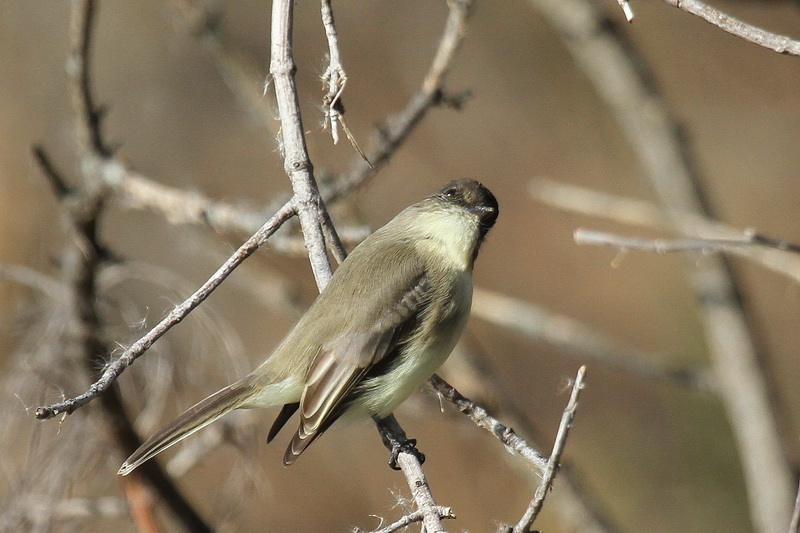
| Eastern Phoebe |
This year, I heard “phoe-be ... phoe-be” as I went out for the mail mid-morning on April 8. Hurrying back inside, I called out, “I just heard the phoebe!!” From somewhere came the answering echo, “Wonderful! It’s Spring!” The exchange rolled through the usually calm rooms of our home, causing one of our cats to raise her head and wonder about all the fuss.
The Eastern Phoebe arrives in my neighborhood some time between the very last days of March and the middle of April. The ground squishes beneath the step. The retreating snow waters the snow drops. The winter rye is greening up and the garlic is emerging. The river behind our home runs high and fast, its sparkling water crystal green with minerals carried along by the snow melt. On a branch above the river, the gray-backed, white-breasted Eastern Phoebe wags his tail with each spoken “phoe-be,” his “song” as unimaginative as his plumage. But maybe that is not fair. He does vary his song. Sometimes he puts a slight emphasis on the first syllable, sometimes on the second: “Phoe-be ... phoe-Be ... Phoe-be ... phoe-Be.”
The phoebe is a flycatcher. It forages from its perch, flying out to catch insects in mid-air, sometimes dropping to the ground to grab a bite, or hovering briefly to grab something out of the foliage. Wintering in southern North America, it may turn to a diet of berries, but in the north during the summer it goes for the protein contained in wasps, bees, beetles, flies, bugs, grasshoppers, spiders, ticks, millipedes and such like.
| Eastern Phoebe |
The phoebe nests early. Forbush reports that the “first brood often requires six or seven weeks, or even more, from the beginning of the nest until the young have flown; but when the same nest is used for the second brood, a month is ample time, as this brood is reared in warm weather, when food is plentiful and storms usually are few. Both parent birds take part in incubation and in feeding the young, and within one or two days after the first brood leaves the nest, the female begins another or starts repairs on the old nest, while the male cares for the first brood.”
| Eastern Phoebe |
My regard for this small, gentle bird goes back twenty-five years to when I was just beginning to watch birds. I was building a small house in western Pennsylvania. While I was nailing down sub -flooring and nailing up paneling, a pair entered the basement garage and built a mud nest on a beam. As I came and went with tools and materials, they came and went with food for their young. They were such friendly neighbors, busy with raising their family, but always having the time to add a friendly greeting - “phoe-be” - and never too busy that they couldn’t wave tail feathers from a tree branch perch.
| Eastern Phoebe |
Good Birding!
Thursday, May 02, 2013
Sapsucker menage a trois - or not
A highlight of the recent Audubon chapter spring bird walk was the antics of three Yellow-bellied Sapsuckers who were clearly trying to work out relationships among themselves. I assumed that there were two males vying for the attention of one female. But, instead of following them with binoculars, I snapped away with my camera. At home later, I realized that there were two females vying for one rather coy male. Here is a sampling from the entertainment ...
Good Birding!!
Good Birding!!
Saturday, April 27, 2013
Long-tails, Palms, and Swallows
A trip this week to Brunswick, Maine, provided my first opportunity to photograph Long-tailed Ducks. A pair was close to the rocky shore and we could see the "purpose" of the drake's long tail feathers. As the hen followed him, he wagged his long tail ...
It was an impressive display, and one that enabled the hen to assess his qualities as a mate.
She must have been impressed. When he flew, she followed ...
A morning of birding at Florida Lake in Freeport yielded many early migrant songbirds, highlighted by Palm Warblers ...
Migration is concluded for Tree Swallows; they were consumed with courtship and the swallow equivalent of foreplay ...
Good birding!!
| Long-tailed Duck |
| Long-tailed Duck - drake displaying his long tail |
| Long-tailed Duck - hen takes flight |
A morning of birding at Florida Lake in Freeport yielded many early migrant songbirds, highlighted by Palm Warblers ...
| Palm Warbler |
| Palm Warbler |
Migration is concluded for Tree Swallows; they were consumed with courtship and the swallow equivalent of foreplay ...
| Tree Swallows |
| Tree Swallows |
Good birding!!
Sunday, April 21, 2013
Ah Spring!
Snow still lingers behind the barn and redpolls have made the occasional visit to the feeders in the last few days ...
... but otherwise, all signs point to the arrival of Spring. The Chipping Sparrows are doing vocal battle in the morning, and the "peter, peter, peter" of the Tufted Titmouse proclaims his jealous watch over his territory ...
In the garden, crocus draw in the honey bees ...
No one needed to "plan" a birders' walk at Herrick's Cove this morning; it just happened as we welcome the vanguard of the season's migrants and anxiously await the next wave. Among those recent arrivals today were the Yellow-rumped Warblers in splendid breeding attire and Ruby-crowned Kinglets flashing their crown ...
In many wetlands, the geese are well beyond the courtship stage, as this incubating goose attests, her nest perched atop a beaver lodge in Putney's Wilson Wetlands.
Good birding!
| Common Redpoll |
... but otherwise, all signs point to the arrival of Spring. The Chipping Sparrows are doing vocal battle in the morning, and the "peter, peter, peter" of the Tufted Titmouse proclaims his jealous watch over his territory ...
| Tufted Titmouse: "What are you doing of my property?" |
In the garden, crocus draw in the honey bees ...
No one needed to "plan" a birders' walk at Herrick's Cove this morning; it just happened as we welcome the vanguard of the season's migrants and anxiously await the next wave. Among those recent arrivals today were the Yellow-rumped Warblers in splendid breeding attire and Ruby-crowned Kinglets flashing their crown ...
| Yellow-rumped Warbler |
| Ruby-crowned Kinglet |
In many wetlands, the geese are well beyond the courtship stage, as this incubating goose attests, her nest perched atop a beaver lodge in Putney's Wilson Wetlands.
| Canada Goose |
Friday, April 12, 2013
Early Sprimg (Late Winter) Feeder Activity
Take your pick - snow, sleet, freezing rain, rain - we have it all today as winter just refuses to let go of Vermont and New England.
But the birds are moving anyway, and there has been more activity in the yard and around the feeders than I have seen for months.
Highlight has to be the Fox Sparrow - two have been scratching the ground - very welcome visitors who usually stop on the way north (or south). On their recent travels, I have missed them ...
A mixed flock of blackbirds (red-wings, grackles, cowbirds) occasionally do a bit of displaying between frantic eating. Spring is the one time of the year when birders are half glad to see the Brown-headed Cowbird, though on a semi-winter spring day, this birder is mainly glad to be inside ...
Dark-eyed Juncos are moving in a very serious way - the flock around the feeders and yard must be in the 200-300+ range ...
... and finally, FOY Purple Finches. The blackbirds are chasing the boys from the ground and platform, leaving only the high hanging sunflower feeder. Photo is through door window and storm section, but that helps capture is misery of the day ...
Good birding, all things considered ... but better birding is on the way!
But the birds are moving anyway, and there has been more activity in the yard and around the feeders than I have seen for months.
Highlight has to be the Fox Sparrow - two have been scratching the ground - very welcome visitors who usually stop on the way north (or south). On their recent travels, I have missed them ...
| Fox Sparrow |
A mixed flock of blackbirds (red-wings, grackles, cowbirds) occasionally do a bit of displaying between frantic eating. Spring is the one time of the year when birders are half glad to see the Brown-headed Cowbird, though on a semi-winter spring day, this birder is mainly glad to be inside ...
| Brown-headed Cowbird |
Dark-eyed Juncos are moving in a very serious way - the flock around the feeders and yard must be in the 200-300+ range ...
| Dark-eyed Junco |
... and finally, FOY Purple Finches. The blackbirds are chasing the boys from the ground and platform, leaving only the high hanging sunflower feeder. Photo is through door window and storm section, but that helps capture is misery of the day ...
| Purple Finch |
Good birding, all things considered ... but better birding is on the way!
Thursday, April 04, 2013
Ring-necked Duck
I'm back home in Vermont where winter is still hanging on. The snow pack in the yard is retreating, but every so slowly.
Even so, today there was a feel of Spring which sent me down along the Connecticut River. The ice is still not out of the Retreat Meadows waters, but it is receding.
Few of the small birds have ventured this far north yet, but ducks are passing through, including one of my favorites ... the handsome and dapper Ring-necked Duck.
The name is often a puzzlement to modern birders, because we hunt them with binoculars, not with shotguns as did the reputable ornithologists of previous generations. So we don't get to see the "ring" on the neck.
Ah ... but sometimes the camera does see the ring on the neck ....
And ... a few additional shots of this diving duck and its pitter-patter means of getting airborne ...
Good Birding!!
Even so, today there was a feel of Spring which sent me down along the Connecticut River. The ice is still not out of the Retreat Meadows waters, but it is receding.
Few of the small birds have ventured this far north yet, but ducks are passing through, including one of my favorites ... the handsome and dapper Ring-necked Duck.
The name is often a puzzlement to modern birders, because we hunt them with binoculars, not with shotguns as did the reputable ornithologists of previous generations. So we don't get to see the "ring" on the neck.
Ah ... but sometimes the camera does see the ring on the neck ....
And ... a few additional shots of this diving duck and its pitter-patter means of getting airborne ...
Good Birding!!
Monday, April 01, 2013
The Winged Tiger in Our Woods
I overheard a conversation some time ago. A woman was lamenting the disappearance of her cat. It was outside at night, and never returned. In the woods near her home, she had seen the tracks of a fisher. With a wavering voice, she concluded that her beloved tom had been taken by the fisher.
The out-of-doors can be a dangerous place for all manner of animals. A house cat out-of-doors is a predator. A recent study has significantly raised the estimate of carnage from outdoor cats; they are the leading cause of death among both birds and mammals in the United States, killing 1.4 billion to 3.7 billion birds each year. A beloved house cat sometimes brags of its prowess by depositing a carcass at the feet of its owner (or cat servant). Sometimes the cat lover will complain about the carcass, but rarely about the unseen toll that the out-of-doors cat may take on other wildlife.
However, fair is fair. Out-of-doors, the distinction between predator and prey is rarely a firm distinction. Beloved domesticated kitty and untamed wild animal means nothing when they all roam, unleashed through the woods, shrubs and fields. Predator may become prey. The predatory house cat may be preyed upon, and not return home come morning.
I was tempted to interrupt the woman whose quavering voice lamented the loss of her beloved tom and tell her that beloved kitties are not killed by fishers if they are kept indoors. I did not say that to her. I say it now to all cat owners. Your outdoor cat is a predator. It is also fair prey. Keep it inside. End of sermon.
Pound for pound and ounce for ounce, the fisher may be the most formidable four legged predator in our woods, quite capable of killing an animal larger than itself, including tame pussy cats and of holding off, or even taking down, most slobbering house dogs. However, I suspect the fisher takes the blame for more house cat disappearances than it deserves. The true tiger in our woods is not fur bearing, but feathered - a stealth hunter.
Bubo virginianus - The Great Horned Owl. One of the folk names for the Great Horned Owl is Cat Owl. When food is short, wrote Edward Forbush, the Massachusetts ornithologist, “the owl will attack even the domestic cat, and usually with success.”
The Great Horned Owl is our most widespread owl, found throughout North and South America, and adapted to a wide variety of habitats. “Powerful” and “dangerous” are the adjectives most frequently used by writers from the early nineteenth to the early twenty-first centuries to describe this bird. John James Audubon knew it as one of the most common species along the shores of the Ohio and Mississippi Rivers. “The Great Horned Owl,” Audubon wrote, “lives retired, and it is seldom that more than one is found in the neighbourhood of a farm, after the breeding season; but as almost every detached farm is visited by one of these dangerous and powerful marauders, it may be said to be abundant. The havoc which it commits is very great. I have known a plantation almost stripped of the whole of the poultry raised upon it during spring, by one of these daring foes of the feathered race, in the course of the ensuing winter.”
The Great Horned Owl may have an equal in the Western Hemisphere as a predator, but it has no superior. And in our neighborhoods, it has no superior. The imperial looking Bald Eagle doesn’t begin to compare as a predator. Our national symbol is quite content to feed on a deer carcass (something a Great Horned would never do), or steal fish from an osprey. The Bald Eagle is an adept fish hawk. When necessary, it is capable of taking the similarly sized Canada Goose. But the Great Horned Owl can also take the Canada Goose is spite of the goose weighing three times as much as the owl. It may take a Wild Turkey which can weigh even more than the goose. And, the Great Horned has been observed driving the Bald Eagle away from its aerie and appropriating the nest for its own use. Again, quoting Forbush: “The Great Horned Owl is no respecter of persons. It kills weaker owls from the Barred Owl down, most of the hawks and such nocturnal animals as weasels and minks.” In Texas during a three night period, a Great Horned took a Cattle Egret, a Great Blue Heron, and a gray fox.
The Great Horned Owl has many enemies that hate him, but none that are dangerous, except for humans. It has earned the particular enmity of the crow. And for good reason - its depredations among the crow population can be prodigious. It will take old and young crows from the nest at night and during the winter will pick crows off of their night roosts. It is crows that will most often give away the Great Horn’s presence during the day. When you see crows noisily flying around the top of a tree, it is quite likely that they are mobbing their most dangerous enemy. Eventually the crows’ harassment may stir the desultory owl into flight; as it leisurely flies off, the crows continue their uproarious pursuit. Pete Dunne writes: “Absolutely hated by crows, who amuse themselves by gathering around roosting owls and haranguing them with a gritty vehemence they inflict on no other enemy.” Except - there is nothing amusing about the crows’ actions. The presence of the Great Horned Owl is a mortal danger to the crows. The crows may be courageous and bold during the day, but when night descends they cede any advantage they might have to the powerful stealth hunter of the night.
The Great Horned Owl shares habitat with the Red-tailed Hawk. If you have the hawk, you almost certainly have the owl. One is diurnal, the other nocturnal. The Great Horned Owl nests early, often as early as February when winter still holds its grip. It will sometimes appropriate an old Red-tailed Hawk nest.
In our regenerated Vermont woodlands, it is very difficult to sight a Great Horned Owl. One time on a wooded Newfane hill, I was sure there was a Great Horned in a tree overhead - the mobbing crows gave away its presence with their loud and wild cawing. But the owl was impervious to the crows and I never saw a shadow of its flight.
At night it is easier to know its presence. I have often heard this owl at night as it queries the dark landscape and answers itself: “Whooo’s awake? ... Meee, too .... Whooo’s awake? .... Meee too.” The owl is probably calling for its mate, but he is also telling me that the night belongs to him.
One January day in Arizona, I saw three Great Horned Owls. I was with people who knew where they roosted. They led the way through the desert to a copse near a watering hole where we searched the bare trees for the owl. Its appearance as it perched on the limb conveyed a somnolent disregard for us, or perhaps a haughty arrogance. But as it turned its head and blinked in my direction I felt a sleepy malice in his stare. I was glad that I was too big to be in danger from this winged tiger. At least, I think I was too big.
| Outdoor cats are predators which kill billions of birds and mammals. |
However, fair is fair. Out-of-doors, the distinction between predator and prey is rarely a firm distinction. Beloved domesticated kitty and untamed wild animal means nothing when they all roam, unleashed through the woods, shrubs and fields. Predator may become prey. The predatory house cat may be preyed upon, and not return home come morning.
I was tempted to interrupt the woman whose quavering voice lamented the loss of her beloved tom and tell her that beloved kitties are not killed by fishers if they are kept indoors. I did not say that to her. I say it now to all cat owners. Your outdoor cat is a predator. It is also fair prey. Keep it inside. End of sermon.
Pound for pound and ounce for ounce, the fisher may be the most formidable four legged predator in our woods, quite capable of killing an animal larger than itself, including tame pussy cats and of holding off, or even taking down, most slobbering house dogs. However, I suspect the fisher takes the blame for more house cat disappearances than it deserves. The true tiger in our woods is not fur bearing, but feathered - a stealth hunter.
| Great Horned Owl guards its nest at Heinz NWR |
The Great Horned Owl is our most widespread owl, found throughout North and South America, and adapted to a wide variety of habitats. “Powerful” and “dangerous” are the adjectives most frequently used by writers from the early nineteenth to the early twenty-first centuries to describe this bird. John James Audubon knew it as one of the most common species along the shores of the Ohio and Mississippi Rivers. “The Great Horned Owl,” Audubon wrote, “lives retired, and it is seldom that more than one is found in the neighbourhood of a farm, after the breeding season; but as almost every detached farm is visited by one of these dangerous and powerful marauders, it may be said to be abundant. The havoc which it commits is very great. I have known a plantation almost stripped of the whole of the poultry raised upon it during spring, by one of these daring foes of the feathered race, in the course of the ensuing winter.”
| Great Horned Owl - Bombay Hook NWR |
![]() |
| Great Horned Owl near Bisbee, AZ |
The Great Horned Owl shares habitat with the Red-tailed Hawk. If you have the hawk, you almost certainly have the owl. One is diurnal, the other nocturnal. The Great Horned Owl nests early, often as early as February when winter still holds its grip. It will sometimes appropriate an old Red-tailed Hawk nest.
In our regenerated Vermont woodlands, it is very difficult to sight a Great Horned Owl. One time on a wooded Newfane hill, I was sure there was a Great Horned in a tree overhead - the mobbing crows gave away its presence with their loud and wild cawing. But the owl was impervious to the crows and I never saw a shadow of its flight.
At night it is easier to know its presence. I have often heard this owl at night as it queries the dark landscape and answers itself: “Whooo’s awake? ... Meee, too .... Whooo’s awake? .... Meee too.” The owl is probably calling for its mate, but he is also telling me that the night belongs to him.
| Great Horned Owl near Wilcox, AZ |
Friday, March 29, 2013
Wood Duck - Homage to the Hen
It was a marvelous Spring morning along the Wissahickon Creek in Philadelphia - delightful temperatures, brilliant blue sky, few people, and 25-30 Wood Ducks.
The drake Wood Duck is arguably the most beautiful North American duck - brilliantly colored, showy - even gaudy. I have known many people who, when given a good look at the drake, catch their breath in astonishment. With good reason ...
But ... when I moved to Vermont 15 years ago, a neighbor (now friend and birding companion) advised, almost off-handedly, not to overlook the hen - that she was the most attractive female duck in North America, a rival to the male of some other species. She is easy to overlook. When seen together, attention is naturally drawn to her mate ...
My friend was, and is right. With wonderful lighting and conditions, and many opportunities, I focused my camera's attention on the Wood Duck hen. Here is a homage to a beautiful lady ...
As I walked along Forbidden Drive, most of the males who were warming themselves on the sunny shore of the creek, quickly retreated to the opposite side. Not this hen, she found something tasty on the creek bottom, and she was not put off as I crept close to spy on her. She simply dabbled away ...
The Wood Ducks on the Wissahickon are wild, but opportunistic, sometimes mixing in with the semi self-domesticated Canada Geese and Mallards, and competing with them for the bread crumbs which people throw. This hen, bless her, did not allow the testosterone driven, aggressive drake, nor the many-times larger goose, to intimidate her. She grabbed the soggy morsel, and it was gone. ...
Dessert to the visual Wood Duck feast, was the repetitive call of the Eastern Phoebe, and the first tentative bubbling of the Winter Wren. Spring! ... and Good Birding!
The drake Wood Duck is arguably the most beautiful North American duck - brilliantly colored, showy - even gaudy. I have known many people who, when given a good look at the drake, catch their breath in astonishment. With good reason ...
But ... when I moved to Vermont 15 years ago, a neighbor (now friend and birding companion) advised, almost off-handedly, not to overlook the hen - that she was the most attractive female duck in North America, a rival to the male of some other species. She is easy to overlook. When seen together, attention is naturally drawn to her mate ...
My friend was, and is right. With wonderful lighting and conditions, and many opportunities, I focused my camera's attention on the Wood Duck hen. Here is a homage to a beautiful lady ...
As I walked along Forbidden Drive, most of the males who were warming themselves on the sunny shore of the creek, quickly retreated to the opposite side. Not this hen, she found something tasty on the creek bottom, and she was not put off as I crept close to spy on her. She simply dabbled away ...
The Wood Ducks on the Wissahickon are wild, but opportunistic, sometimes mixing in with the semi self-domesticated Canada Geese and Mallards, and competing with them for the bread crumbs which people throw. This hen, bless her, did not allow the testosterone driven, aggressive drake, nor the many-times larger goose, to intimidate her. She grabbed the soggy morsel, and it was gone. ...
Dessert to the visual Wood Duck feast, was the repetitive call of the Eastern Phoebe, and the first tentative bubbling of the Winter Wren. Spring! ... and Good Birding!
Subscribe to:
Posts (Atom)