Showing posts with label Brown-headed Cowbird. Show all posts

Monday, May 16, 2016

Backyard Birding

The backyard has been very busy in the last couple of weeks. This is just a sample, beginning with the four pair of Evening Grosbeaks and three pair of Rose-breasted Grosbeaks ...

Evening Grosbeak (male)

Evening Grosbeak (male)
Evening Grosbeak (male) with Brown-headed Cowbird (male)

Rose-breasted Grosbeak (male)

Rose-breasted Grosbeak (male)

Rose-breasted Grosbeak (male) and Evening Grosbeak (male)
If the Blue Jay was a rare bird, we would fall over ourselves in admiration of its beauty, but they are common, noisy, and perceived as bullies - though in actuality, no worse than any of the other birds at the feeders who will chase off other birds to get their favored seeds. I love the jays - raucous rogues that they are ...

Blue Jay
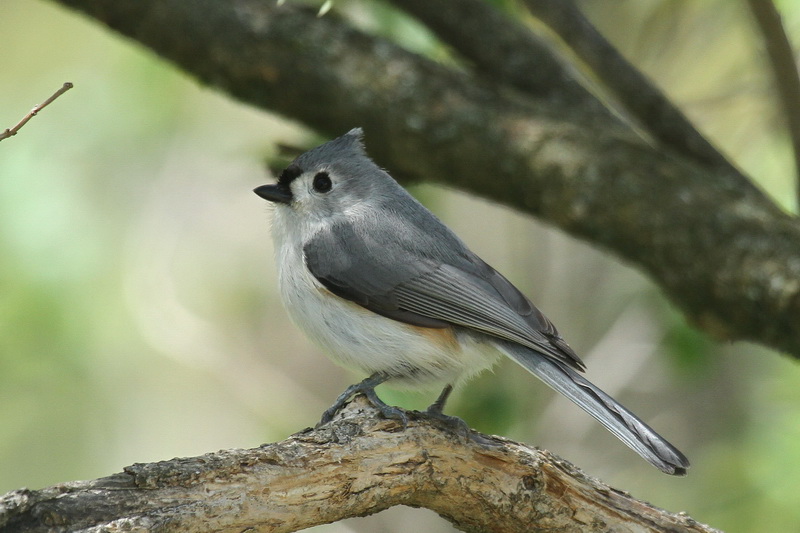
Year round birds accustomed to our presence and almost pets, are the Tufted Titmouse and Black-capped Chickadee. This one came to the rock five feet from where I was sitting to grab a hunk of suet that had fallen from the eave feeder ...

Tufted Titmouse

Black-capped Chickadee
The Red-bellied Woodpecker has been in the neighborhood for about seven years. Unlike the Downy and Hairy which wait for me to put out the suet in the morning, the Red-bellies are still wary and shy, but eagerly come to the suet and feeders and always provide stunning entertainment ...

Red-bellied Woodpecker (male)

Red-bellied Woodpecker (male)
GOOD BIRDING !!!

Saturday, May 02, 2015

Spring Migration - Arrivals

Southeastern Vermont Audubon has done 2 walks along the old railroad bed at the Hinsdale Setbacks, listing species, and hoping to establish a baseline for future years.

Yellow-rumped Warblers have been the most numerous warbler to date, followed by Palm Warbler, and those are the only 2 which have provided photo ops.

Yellow-rumped Warbler

Palm Warbler
On some occasions at the setbacks, Tree Swallows are been rife ...

Tree Swallows

After today's walk, I did my favorite type of birding - sitting on the back porch and watching the action around the yard. The new arrival today was the Rose-breasted Grosbeak ... at least 3 males. Girls haven't arrived yet.

Rose-breasted Grosbeak

Rose-breasted Grosbeak
The Evening Grosbeaks are back in numbers (yet to figure out how many pairs). They are using the maple just off the porch to do their courtship (when they aren't emptying the feeders of sunflower seeds). The boys are displaying their fine grosbeak genes ...

Evening Grosbeak displaying

Evening Grosbeak displaying
 Finches have also been abundant, including Pine Siskins ...

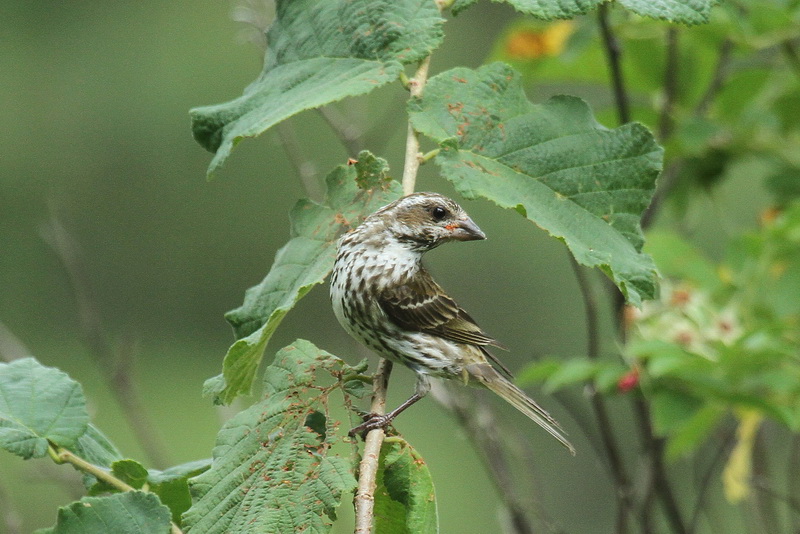
Purple Finch

Finch Feeder - Purple Finch (female), Pine Siskins, American Goldfinch
I don't want to neglect the year-round residents who endured the tough winter, and are now singing the hearts out. Black-capped Chickadee is just one ...

Black-capped Chickadee
And to add the downside to all of this, there have been plenty of Brown-headed Cowbirds ...

Brown-headed Cowbird
Good Birding !! ... and more to come

Friday, April 12, 2013

Early Sprimg (Late Winter) Feeder Activity

Take your pick - snow, sleet, freezing rain, rain - we have it all today as winter just refuses to let go of Vermont and New England.

But the birds are moving anyway, and there has been more activity in the yard and around the feeders than I have seen for months.

Highlight has to be the Fox Sparrow - two have been scratching the ground - very welcome visitors who usually stop on the way north (or south). On their recent travels, I have missed them ...

Fox Sparrow

A mixed flock of blackbirds (red-wings, grackles, cowbirds) occasionally do a bit of displaying between frantic eating. Spring is the one time of the year when birders are half glad to see the Brown-headed Cowbird, though on a semi-winter spring day, this birder is mainly glad to be inside ...

Brown-headed Cowbird

Dark-eyed Juncos are moving in a very serious way - the flock around the feeders and yard must be in the 200-300+ range ...

Dark-eyed Junco

... and finally, FOY Purple Finches. The blackbirds are chasing the boys from the ground and platform, leaving only the high hanging sunflower feeder. Photo is through door window and storm section, but that helps capture is misery of the day ...

Purple Finch

Good birding, all things considered ... but better birding is on the way!

Monday, July 16, 2012

More Youngsters

The next generation of birds keep passing through the yard. Two families of Black-capped Chickadees made a rapid transit. The family of Tufted Titmice paused briefly in a bush, giving the young one a brief opportunity to beg.Chipping Sparrow young are feeding themselves.

Yesterday was a gray - and finally rainy - day, but many young were about. Probably the best juvenile for the yard this year was a Black-and-White Warbler. (The young age is more apparent in another photo, but it is not sharp enough for posting, and even this photo is marginal) ...

Black-and-White Warbler - juvenile
 The Purple Finch juveniles were everywhere. This one may look slightly perplexed - or hopeful that someone might still provide food - but it figured things out on its own ...


Purple Finch - juvenile

American Robins were not at the feeders, but were working the lawns and the river bed, although this young bird seemed a bit perplexed about it all ...

American Robin - fledgling
 The Northern Cardinal juvenile was very skittish and especially shy about having his picture taken, but it eventually managed to grab a seeds ...

Northern Cardinal - juvenile

Red-winged Blackbirds are regular and common visitors to the yard, but yesterday I had a first ever observation when fledglings begged for food and were fed by a male. The nesting habitat is probably marginal for the blackbirds, so the males are unable to acquire the usual harem. Obviously, this drives them to desperate measures ... like helping with the child rearing ...

Red-winged Blackbird - fledgling begging

Red-winged Blackbird - fledgling being fed

And finally ... I paid attention yesterday and saw what I have been missing in the past - a juvenile Brown-headed Cowbird. As many cowbirds as there are around, I knew they must be parasitizing nests, but have not had confirmation ...

Brown-headed Cowbird - juvenile
Good Birding (well, maybe with the exception of the cowbird) !!


Tuesday, July 12, 2011

Brown-headed Cowbird

I don't know anyone who would say "Brown-headed Cowbird" and "one of my favorite birds" in the same sentence. I certainly don't. But in certain light, the male does shine with an iridescence that almost rivals that of some other blackbirds.


... and the males do go about their strutting and displaying with the same vigor that most other male birds demonstrate - all in the quest for that brief moment when a female will welcome his attention, coy and discriminating creature that she is ...

Thursday, December 16, 2010

LBJs - IDs for 3 & 4

Little Brown Jobs - Here's the IDs on the Sunday and Tuesday posts. Scroll down for last week's IDs, or go further to see Quiz 1 & 2. Thanks for dropping by.

#11 - Chipping Sparrow, non-breeding adult, late October. The cap is not the deep red of a breeding adult, but still very rufous, more so than that of the juvenile. In late summer and early fall, the juveniles I see in the yard are even plainer than this bird, which leads me to say this is an adult. Note the clean, grayish breast -  an important field mark so as not to confuse this sparrow with a similar winter sparrow.

#12 - House Sparrow, female - A bird that birders love to hate, although that is not fair to the handsome male, and the fact that in NA this bird has adapted to harsh environments, such as inner cities. She is dingy brown, but lighter stripe behind her head is a good field mark. Also, a big head, stout bill.
#13 - Lincoln's Sparrow - Looking at the head, one might think Song Sparrow, but the supercilium is a much broader gray, the streaking on the breast is crisp and thinner, and the breast is buffy. It is smaller than the Song, more delicate; its beak is more pointed. Even so, this is a difficult bird for me, because I do not see it often. Even when I chased down breeding Lincoln's in the Green Mountains this past June, this shy sparrow gave few good looks. It is always something of a surprise to see one in my neighborhoods, though I suspect I may be overlooking it because I don't expect it.

#14 - Purple Finch, female - Quite a contrast to the deep, red wine color of the male. She is similar to the female House Finch, but stouter, more heavily streaked. The stripe above the eye is a good field mark. I sometimes think of her as a scaled down version of the female Rose-breasted Grosbeak. Her finch beak is larger that the House Finch; Pine Siskin beak is smaller and pointed.

#15 - Brown-headed Cowbird, female - Larger than most LBJs, this blackbird is another bird that birders love to hate, which is unfair because she finds so many more nests to drop her eggs into due to our radical alteration of the landscape. She is a dirty brown-gray, or gray-brown. I photographed this bird on the back of a horse. She was in a mixed flock of female cowbirds and female House Sparrows; it was a flock of nondescript birds. Either species could have been overlooked in the colorless plumage and songless calls.

#16 -  American Tree Sparrow - Very similar to the non-breeding and juvenile Chipping Sparrow, but considerably larger, with a bi-color bill, a warm tan wash along the flanks, and a distinct, isolated dark spot on the breast
#17 - Chipping Sparrow, fledgling - This was a very young bird just recently out of the nest, photographed in mid-August. It was being fed by parents. Even without those helps, the strong, dark eye-line remains a good clue to ID.
#18 -  House Sparrow, male - Putting aside prejudice, this introduced species is handsome, and the black bib and bold pattern is distinctive.
#19 -  Pine Siskin - goldfinch in disguise. Pointed beak, strong streaking, and hints of yellow in the wings, set this finch apart from other finches.
#20 - Purple Finch, female - Note the strong brown and white pattern on the head, and large finch beak.

LinkWithin

Related Posts with Thumbnails