Showing posts with label Red-bellied Woodpecker. Show all posts

Saturday, July 09, 2016

New Camera Body

Thursday my new camera body arrived - Canon 7D Mark II (upgrading from the 7D).

Miserable gray weather, so trying it out has been limited to the back porch. But so far I am pleased.

20.2MegaPixel (versus 18MP) and a better processor means I can crop without loosing resolution. Better sensor means I can shoot at higher ISO without noise. Most pictures here were taken at 1600 ISO - previously I rarely went above 800 and preferred 400.

Lighting and weather today have been dreary, but the camera has responded well.

Many features still to work with, but the spot focus option and spot metering is great for birds which often hide in the leaves. Several of the pictures here would not have been possible with my previous camera. Second 2 photos below cropped about 25% of original.

Gray Catbird
Red-bellied Woodpecker
Northern Cardinal (fledgling)
Rose-breasted Grosbeak
 Spot focusing makes possible a sharp image even though it is partially obscured by foliage.

Rose-breasted Grosbeak
In the dreary light, the camera is still able to capture detail of this fledgling as it begs to be fed ...

Rose-breasted Grosbeak (fledgling)
Fledgling Rose-breasted have one of the sweetest begging calls of any bird - not at all harsh, or noisy - the opposite extreme of the very loud and noisy Blue Jays.

Rose-breasted Grosbeak fledgling fed by its father.

Daughter Downy wanted dad to keep feeding her, but he refused, and eventually she figured out that she could get the food for herself ...

Downy Woodpecker (adult male) with fledgling female
Another spot focusing example ...

Northern Cardinal (fledgling female)
And finally ... just because there are so many of these creatures which do not understand "bird feeder."

Eastern Chipmunk
BTW, lens used is Canon 100-400 L. Most photos are 400mm focal length.

Monday, May 16, 2016

Backyard Birding

The backyard has been very busy in the last couple of weeks. This is just a sample, beginning with the four pair of Evening Grosbeaks and three pair of Rose-breasted Grosbeaks ...

Evening Grosbeak (male)

Evening Grosbeak (male)
Evening Grosbeak (male) with Brown-headed Cowbird (male)

Rose-breasted Grosbeak (male)

Rose-breasted Grosbeak (male)

Rose-breasted Grosbeak (male) and Evening Grosbeak (male)
If the Blue Jay was a rare bird, we would fall over ourselves in admiration of its beauty, but they are common, noisy, and perceived as bullies - though in actuality, no worse than any of the other birds at the feeders who will chase off other birds to get their favored seeds. I love the jays - raucous rogues that they are ...

Blue Jay
Year round birds accustomed to our presence and almost pets, are the Tufted Titmouse and Black-capped Chickadee. This one came to the rock five feet from where I was sitting to grab a hunk of suet that had fallen from the eave feeder ...

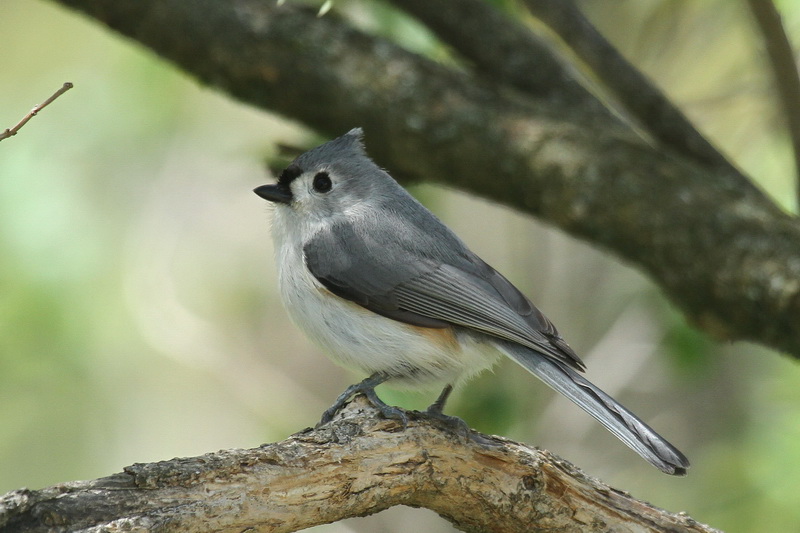
Tufted Titmouse

Black-capped Chickadee
The Red-bellied Woodpecker has been in the neighborhood for about seven years. Unlike the Downy and Hairy which wait for me to put out the suet in the morning, the Red-bellies are still wary and shy, but eagerly come to the suet and feeders and always provide stunning entertainment ...

Red-bellied Woodpecker (male)

Red-bellied Woodpecker (male)
GOOD BIRDING !!!

Wednesday, July 01, 2015

A Busy Day in the Yard


This afternoon alternated between heavy showers and golden sunshine, and the yard was as busy as ever. At least two dozen species (maybe three dozen) nest in our immediate neighborhood, and most of those make regular visits to our bird feeders. I sat on the back porch and watched the show! Hardly a pause in the activity ... a captivating way to spend an afternoon.

Here is just a sample ...

Rose-breasted Grosbeak
Rose-breasted Grosbeak - immature male

Mourning Dove
Red-bellied Woodpecker

Evening Grosbeak
Northern Cardinal

Purple Finch
 
American Goldfinch
Gray Catbird
White-breasted Nuthatch waits its turn - Evening Grosbeak (female)
It is a BIRD Feeder!! What do you not understand about BIRD FEEDER?


Good Birding !!

Saturday, December 22, 2012

CHRISTMAS BIRD COUNT - A SNAPSHOT OF WINTER BIRDS

Eastern Bluebirds favor orchards during winter.
During the winter months, it is not uncommon to hear the question, “Where are all the birds?”

A flip answer would be - “They’ve gone south” - which they have. Most of the birds which fill our landscapes during the summer are tropical birds which return to the tropics in Central and South America during our winter months. Most of the warblers, vireos, thrushes, and flycatchers fall into this category. Many other birds move to the milder climate of the southern states: This includes many species of waterfowl, wading birds, and raptors, plus some of the hardy songbirds.

On the other hand, boreal species from the north also move south, driven by changes in the weather, but also, and probably more importantly, by the availability of food in their northern homes. Food availability means that some winters they more or less stay home, while other winters they irrupt southward. When there is an irruption, we may notice their numbers. When they stay home, we may ask that question about where they are.

Common Redpoll has irrupted into New England this winter.
As we watch our feeders, or wander about on our skis or snow shoes during winter months, it often seems as though we are seeing very few birds compared to what we remember seeing in other years. For example, two years ago during the holidays, my feeders were inundated with northern birds. Flocks of Common Redpolls, and mixed flocks of Evening Grosbeaks and redpolls descended in swarms. I was filling my bulk feeders twice a day. This year as of the time of writing, my feeders have been visited by a small flocks of 15 redpolls, while the grosbeaks have been completely absent.

In October, flocks of 200+ Pine Siskins swarmed about my feeders. During December they have been absent. Where are they? Undoubtedly, they have gone further south, in spite of the dependable food source at my feeders ... because ... birds do not simply rely on bird feeders, but in fact, derive most of their food most of the time from naturally occurring food sources. If those sources do not seem adequate, they move on.

White-breasted Nuthatch is a year-round feeder bird.
There are two citizen science projects which provide a snapshot of where the birds are during the winter. One is the Great Backyard Bird Count. This is primarily a feeder count which is conducted on the President’s Day weekend in February. To learn how you can participate (in the comfort of your home) visit this website: www.birdsource.org/gbbc.

The second citizen science project is the Christmas Bird Count. In its 113th year, the CBC engages over 60,000 people in about 2500 locations.

There are several Christmas Bird Counts done in southeastern Vermont and southwestern New Hampshire. I participate in the Brattleboro Area CBC on the third Saturday in December, so that is the one I can write about.  Here is a snapshot of where the birds are around Brattleboro.

Many participants returned from their day of counting speaking of how hard it was to find birds and how low the numbers were. But when the counts were tallied, the number of birds counted (4100) was slightly above the ten year average (3900).

With open water in the Connecticut and West Rivers, waterfowl were well represented by Canada Goose, Mallard, and American Black Duck. Most significant was the number of Hooded Mergansers. Consistently present on the count, this year the 138 “hoodies” was five times greater than in any previous year.

The winter finches and boreal species showed no consistency as a group. The American Goldfinch was hard to find and the count was the lowest in the last 15 years. Pine Siskin, so abundant in October, was absent. Evening Grosbeak, consistently present the last 11 years was absent. There are usually a few Purple Finches in December; not this year.

Pine Grosbeaks appear in SE Vermont every 5 or 6 years.
On the other hand, Pine Grosbeaks appear every 5 to 6 years. This was their year. Common Redpolls show a consistent pattern of being present every other year. This was the year they were expected, and they did not disappoint; counters tabulated the largest number of redpolls (almost 300) in recent years.

Sparrows were hard to find, but the winter sparrows, American Tree Sparrow and Dark-eyed Junco were within their expected numbers, along with small numbers of Song and White-throated Sparrows.

Red-bellied Woodpecker has continued its expansion in Vermont.
The Red-bellied Woodpecker which first nested in Vermont in Brattleboro in 2001 continued its steady population increase.

Blue Jay and American Crow had their smallest numbers in years. Putney Mountain Hawk Watch counts migrating Blue Jays (when not counting hawks); they counted hundreds of jays. Apparently, the Blue Jays kept on moving because they were difficult to find in the Brattleboro area.

Other common feeders birds were present in average or above average numbers: Black-capped Chickadee (up), White-breasted Nuthatch (up), Downy Woodpecker (down slightly), Tufted Titmouse and Northern Cardinal (steady).

American Robin often winter in Vermont, feeding on fruit.
Some species are seen in flocks, and may be very localized. Horned Larks were in Vernon (180). Eastern Bluebirds were mostly in Dummerston (total 59 verses 10 year average 25). American Robins were scattered, but with a large flock in an old Dummerston orchard (total 244 verses 10 year average 44). Only one small flock of Cedar Waxwings (31) was found around Sunset Lake.

There are always a few birds which should have migrated, but have not. Brattleboro recorded this year a Red-shouldered Hawk and a Common Yellowthroat (a first CBC record for Brattleboro).

If you are a reader who is worried about a lack of birds at the bird feeders, I say, “Don’t be.” The CBC suggests that the birds are still around. Except when humans really screw up the environment, the birds are resilient and adaptable. Their population numbers go through regular and natural fluctuations. Once the counters on a CBC thaw out and examine the count numbers, this is confirmed (for most species) year after year.

Stay warm, and if the birds don’t come to your feeders, go out and look for them. Good birding!!

Tuesday, June 26, 2012

The Next Generation

For the last few weeks, Blue Jays have been "uncharacteristically" quiet as they come to the feeders, gather seeds, and leave. They have been nest building, incubating, and feeding nestlings. They are intelligent corvids, and they know not to draw attention to themselves during this vulnerable time. I have been waiting for the jolly raucousness to return, along with fledglings demanding to be fed. That happened this morning, as young swarmed through the trees, begging loudly and and chasing after parents when they did not get their way immediately ...

Fledgling Blue Jay begs for food
 The first fledgling Evening Grosbeak was fed in our backyard on June 9 ...

Evening Grosbeak - juvenile

... since that day, the young have been brought around for food and self-feeding instruction on a regular basis ...

"Hey Dad, is this where I get the food?"

Additional members of the Next Generation which we have helped to raise include ...

Downy Woodpecker ...

Mrs. Downy (the frazzled one in the back) feeds her daughter

Mr. Downy feeds his son
Hairy Woodpecker ...

Hairy Woodpecker - juvenile male
Red-bellied Woodpecker ...

A "shy" Red-bellied Woodpecker - he/she would not look at the camera
Common Grackle ...


Fledgling Common Grackle - one of many!
... and finally ... the Cedar Waxwings are getting down to the business of the season. This pair copulated on the branch while I went for my camera. When I finally focused on them, they had happy smiles, then flew off.

Cedar Waxwings
Good birding!!


Monday, December 27, 2010

With the Blizzard came ...

I was preparing another Little Brown Job exercise this morning, when a grandson came up the stairs to tell me there were lots of birds at the feeders. Indeed there were!!!

Common Redpolls arrived with the blizzard in numbers I have not seen in almost four years. The flock numbers at least 50 birds.

A few days ago I extended the actual count of Evening Grosbeaks to 63. The flock feeding this morning could not be counted, but was 100+.

Early this morning, I swept 12 inches of snow off the platform feeder, shoveled the snow from the back porch and scattered seed there, and filled all the feeders. Soon after, the birds arrived ...

10 Common Redpolls (and one Dark-eyed Junco)

An additional 12 redpolls - still a small part of total flock, & only 1/3 of those feeding on porch

6 Redpolls feeding with 3 Evening Grosbeaks & 1 junco

Redpolls lining up on the bulk feeders

17 Evening Grosbeaks beneath bulk feeder
Red-bellied Woodpecker reluctantly shares feeder with Evening Grosbeak
I wish I could answer the inquiries as to why I have so many Evening Grosbeaks. Probably because I provide plenty of seed all year, and there are nesting pairs which feed their young here. Then add in the grosbeak communication network, and the result seems to be that most of southern Vermont's wintering Evening Grosbeaks are in my yard (judging from the lack of reports from elsewhere).

More blizzard/bird images soon.

LinkWithin

Related Posts with Thumbnails