Wednesday, February 01, 2012

Road Salt

White-winged Crossbills often become
"intoxicated" on road salt
Not long ago a friend arrived late for a community supper. The reason she gave for being late was received by some in the group as far-fetched, but they acknowledged that it was a creative and original excuse. She said, “I was coming down Newfane Hill and there were a couple of White-winged Crossbills in the middle of the road. They must have been intoxicated with salt because they wouldn’t move, so I had to get out of the car and make them move.” When I came soberly to her defense, it was then suggested that perhaps I had the same problem as the birds.

Intoxicated is not precisely correct, but it is close enough. Crossbills have a fondness for salt, and (according to Forbush) they will eat almost anything that is well-salted. Along our winter roadways, they can get their salt along with a dietary essential - dirt and grit. But too much salt can produce listlessness leading to mortality. That is, the birds don’t feel like moving and get run over, unless the approaching driver has a greater concern for the birds than getting somewhere on time - and there don’t seem to be too many drivers like that on our roads.

This opens a couple of doors on bird biology. Birds lack teeth and have little sense of taste, and so tend to swallow their food whole. Their stomachs have two parts, one with digestive juices which act similar to the human stomach and a second, large stomach known as the gizzard. The tough hard muscular walls of the gizzard, aided by swallowed sand and dirt, serve the function performed by human teeth, grinding and pulverizing solid substances such as seeds. Those flocks of finches and juncos which we see along our roadways in the winter are eating dirt - they are ingesting the grit necessary to enable the gizzard to “chew” the seeds which they swallow whole.

Coincidentally, they are also getting a good bit of salt as well, and this can present a problem for the birds. Human kidneys are not very effective at flushing salt from our system; it requires lots of fresh water. Those old mariners set adrift on oceans of salt water died of thirst: “water, water everywhere, and not a drop to drink.” If they drank the salt water, their kidneys would dehydrate the rest of the body to flush the salt.

The "tubenose" of pelagic birds, like Cory's Shearwater,
is visible evidence of the salt gland
which secrets salt from species which live on salt water

Bird kidneys are even less effective in dealing with excess salt than are human kidneys. However, sea birds will often spend months far removed from any fresh water and must drink sea water. How do they manage? They manage through a special gland located in the skull over and/or in front of the eyeholes and connected to the nasal opening by a duct. It is called the salt gland. The salt gland removes salt from the bloodstream and then secretes it in a highly concentrated form through the nostrils. The head shaking seen in some oceanic birds is done to expel this saline solution. Salt glands are larger and more developed among seabirds than land birds. Birds we are most likely to see with developed salt glands include gulls, terns, sea-going ducks (eiders), geese, coots, and rails.

Savannah Sparrow in a NJ salt marsh

The salt glands is present in songbirds (passerines) but is not functional unless the birds are regularly exposed to salt. The subspecies of the Savannah Sparrow which lives in salt marshes is able to secrete 2-3 times as much salt as other subspecies which live in salt-free habitats.

So why are the crossbills so fond of salt? I have no idea! The Birder’s Handbook simply notes under “Diet” that White-winged Crossbills are fond of salt, and then adds cyrptically: “Fondness for road salt produces occasional heavy mortality as listless birds are run over.” Too much salt is toxic, and so the birds are “intoxicated,” just as my friend said when explaining her tardiness. I guess we might say that salt is to crossbills what alcohol is to some humans; some individuals don’t know when they’ve had enough.

Good Birding!!


Link to additional information on "Birds and Salt"

Sunday, January 29, 2012

Dabblers Take Flight - Case Study 2

The dabbling ducks (Genus Anas) are inhabitants of marshes, ponds, and small lakes. These habitats often are thick and tangled. When danger comes, they have to get up and out quickly. They leap into the air - virtually straight up - and then get going.

When any of these birds take flight, it happens so fast that we can easily miss the details.

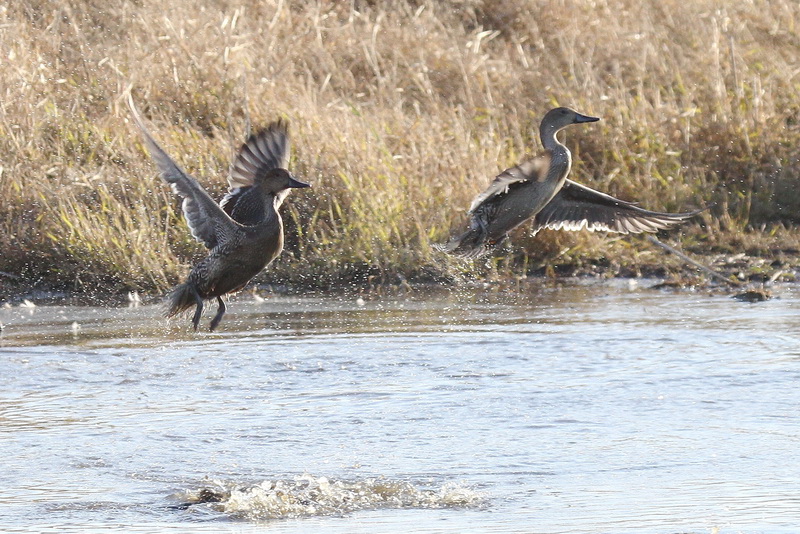
This case study is from a burst of five photographs taken in less than one second. The Northern Pintails (hens) are the two in the center and cropped from the five photos.

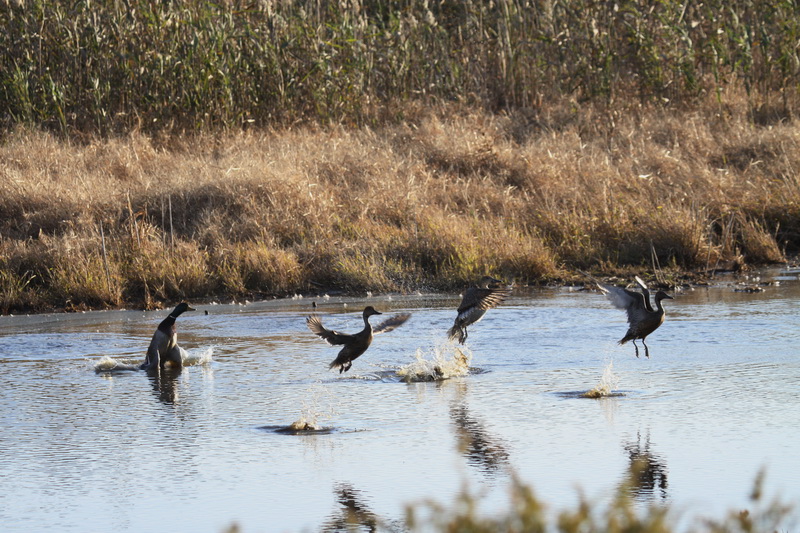
Photo 1 - Mallard and 3 Northern Pintails take flight
Photo 1 - Northern Pintails
Photo 2 - Northern Pintails
Photo 3 - Northern Pintails
Photo 4 - Northern Pintails
Photo 5 - Northern Pintails
 ... and then they were gone in a blur ...

Good Birding!!

Thursday, January 26, 2012

Dabblers Take Flight - Case Study 1

The dabbling ducks (Genus Anas) are inhabitants of marshes, ponds, and small lakes. These habitats often are thick and tangled. When danger comes, they have to get up and out quickly. They leap into the air - virtually straight up - and then get going.

When any of these birds take flight, it happens so fast that we can easily miss the details.

This case study is from a burst of five photographs taken in less than one second. The Mallard (drake) is cropped from the five photos.

Photo 1 (uncropped ) - Mallard & 3 Northern Pintails take flight
Photo 1 - Mallard
Photo 2 - Mallard
Photo 3 - Mallard
Photo 4 - Mallard
Photo 5 - Mallard

... and then he was gone in a blur ...

Good Birding!!

Monday, January 23, 2012

Dabblers Take Flight

The dabbling ducks (Genus Anas) are inhabitants of marshes, ponds, and small lakes. These habitats often are thick and tangled. When danger comes, they have to get up and out quickly. They leap into the air - virtually straight up - and then get going.

Taking flight in this manner is very different from almost all other other waterfowl, which need a running start - often a very long running start.

When any of these birds take flight, it happens so fast that we can easily miss the details. My photography is a relatively new addition to my birding (about 6 years - less than 3 with good equipment). Freezing the moment with the camera has allowed me to see the detail and to learn - plus, it's fun!

This first photograph captures dabbling ducks as they "leap" into flight. In subsequent posts, I will have details from a burst of photos. This is the first in that burst.

Mallard (drake) and 3 Northern Pintails (females) "leap" from the water's surface
 In the next photo, a Gadwall is in the air, while American Coots are just beginning to "run" on the water's surface in order to gather enough speed to get airborne.

A Gadwall "leaps" into flight while American Coots "run" to take flight
The mixed flock of Green-winged Teal and Northern Pintail are on the wing. The American Coot (lower left) is still running, not quite airborne. Note the splashes from the coot's feet.

Green-winged Teal and Northern Pintail - American Coot lower left
To illustrate the contrast with the dabblers, next are two photographs of mergansers. Mergansers are adept divers with legs located toward the rear of the body to assist as they swim underwater; this also makes them very awkward on land. When taking off, they need room to run ...

Common Mergansers (hens)

Hood Merganser (hen)
Where dabblers leap into the air, American Coots patter across the water, flapping furiously in the effort to get airborne. They are tough, adaptable, and common - and thoroughly entertaining. Watching them take flight, or watching them doing whatever they may be doing, will explain the origin of such phrases as - "He is crazy as a coot." - or - "He's a crazy old coot." (This last saying is one I am beginning to find offensive.)

American Coot
More on dabblers leaping into the air in a few days.

Good Birding!

Saturday, January 21, 2012

Bottoms-up - ID Post 3

No. 13 - Mallard
No. 14 - Blue-winged Teal
No. 15 - Northern Pintail
No. 16 - Canada Goose
No. 17 - Gadwall - background, American Coot
No. 18 - Green-winged Teal
No. 19 - Northern Shoveler - background, Northern Pintail

Thursday, January 19, 2012

Dabblers - Bottoms Up - Post 3

(See Post 1 for hints)

Bottoms-up No. 13

Bottoms-up No. 14

Bottoms-up No. 15

Bottoms-up No. 16

Bottoms-up _ No. 17

Bottoms-up No. 18

Bottoms-up N0. 19 (Bonus for IDing ducks in background)

Good Birding!!

Tuesday, January 17, 2012

Bottoms-up - ID Post 2

No. 7 - Northern Pintail - not as much pintail as when he ready for courtship and breeding
No. 8 - Northern Shoveler
No. 9 - Blue-winged Teal
No. 10 - Canada Goose
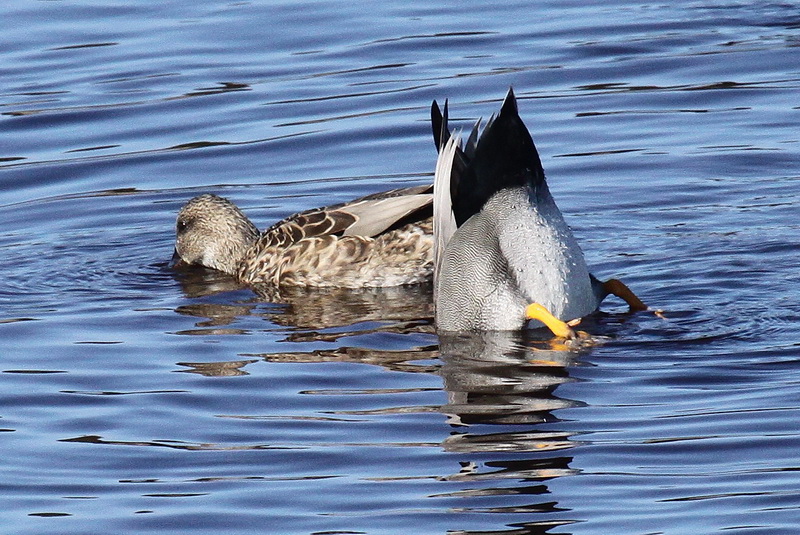
No. 11 - Gadwall

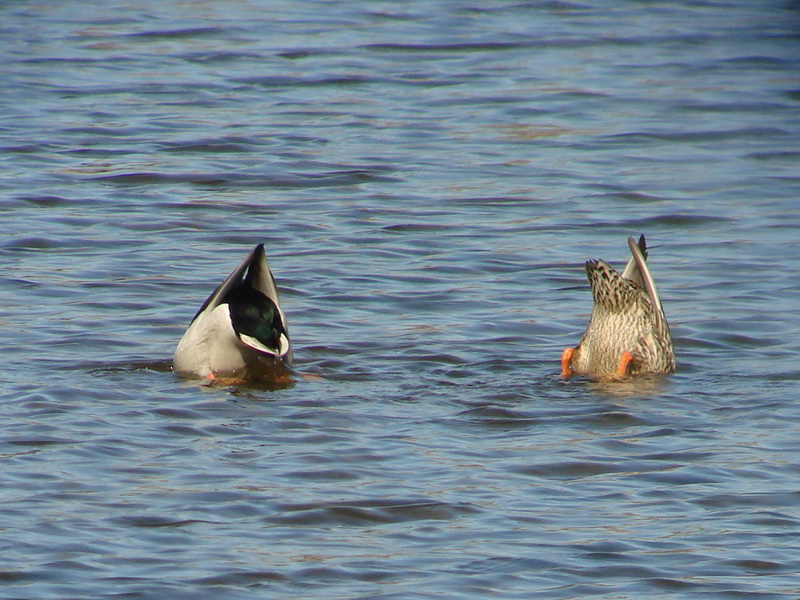
No. 12 - Mallard - (default duck)

Sunday, January 15, 2012

Dabblers - Bottoms Up - Post 2

Note: See Post 1 for some hints.

Bottoms-up No. 7

Bottoms-up No. 8

Bottoms-up No. 9

Bottoms-up No. 10

Bottoms-up No 11

Bottoms-up No. 12
Good Birding!

Friday, January 13, 2012

Bottoms-up - ID Post 1

 No. 1 - Gadwall
 No. 2 - Green-winged Teal
 No. 3 - Mallard (I love the curls on his tail!)
 No. 4 - Mute Swan
 No. 5 - Northern Pintail - note on these breeding plumage males the long "pintail"
No. 6 - Northern Shoveler

LinkWithin

Related Posts with Thumbnails