HAPPY THANKSGIVING !!
Wednesday, November 21, 2012
Yikes! It's Thanksgiving ...
Yikes!! - It's Thanksgiving! - Many of us gather with family and friends and remember blessing. For some, however, it is time to flee ...
Wednesday, November 14, 2012
Visit to Hawk Banding Station
I spent several hours today with a friend who was banding hawks in a hawk banding station. Cold and brisk, but several hatch year birds were hungry enough, and inexperienced enough, to come in on the lure birds.
First, is a hatch year female Cooper's Hawk ...
Several Red-tailed Hawks were caught and received a free metal bracelet. Here a young "Tail" is on the lure ...
While the hawk was on the lure bird momentarily (the spring-trap net was sprung moments after the photo) the lure bird was carefully examined and found unharmed ...
After being measured, weighed, and fitted with a band, the young bird is released ...
Flying free ...
Along the coast there were sizeable flocks of shorebirds, including a few Ruddy Turnstones ...
... and elsewhere, Golden-crowned Kinglets continue to provide wonderful photo ops ...
Good Birding!!
First, is a hatch year female Cooper's Hawk ...
| Cooper's Hawk (hatch year) sporting its new jewlery |
| Cooper's Hawk released after being banded |
| Hatch year Red-tailed Hawk |
| Red-tailed Hawk |
| Red-tailed Hawk (hatch year) released after being banded |
| Red-tailed Hawk |
| Ruddy Turnstone |
... and elsewhere, Golden-crowned Kinglets continue to provide wonderful photo ops ...
| Golden-crowned Kinglet |
Friday, November 09, 2012
Black-throated Green, Rusty, et al - Heinz NWR today
Today was a beautiful, crisp Fall day at John Heinz National Wildlife Refuge at Tinicum in Philadelphia.
It began with a Black-throated Green Warbler, a bird which should be in Belize by now - and if it does not get a move on soon will become a genetic cul-de-sac. Nevertheless, a feast for the eyes, and a cooperative poser for the cameras of several birders.
Photographic highlights included the elusive elf of the tree trunk - Brown Creeper.
Waterfowl are still abundant on the impoundment, including the Ruddy Duck ...
At home in the southeastern corner of Vermont, the Rusty Blackbird has been a hit or miss bird from year to year. But at Heinz NWR has been likely tick on my year list in the Fall and Spring, as it was today ...
Good Birding!!
It began with a Black-throated Green Warbler, a bird which should be in Belize by now - and if it does not get a move on soon will become a genetic cul-de-sac. Nevertheless, a feast for the eyes, and a cooperative poser for the cameras of several birders.
| Black-throated Green Warbler |
| Black-throated Green Warbler |
| Black-throated Green Warbler |
| Black-throated Green Warbler |
| Brown Creeper |
| Brown Creeper |
| Ruddy Duck |
| Rusty Blackbird |
| Rusty Blackbird |
Monday, November 05, 2012
Wood Ducks, Kinglets
A Friday afternoon walk along Philadelphia's Wissahickon River provided great opportunities for Wood Duck photography.
The Wood Ducks were also a case study in birdwatching irony - at home in my Vermont neighborhoods where wild beaver ponds and wetlands provide nesting habitat, it would require exceptional effort and good luck to get photographs like these. On the other hand, an urban park within the city limits of Philadelphia provides daily opportunities to stand in awe of these beautiful birds.
Sunday at Heinz NWR (in the shadow of Philadelphia airport), waterfowl still populated the lake, including several Greater Scaup (no photos), while Yellow-rumped Warblers, Ruby-crowned Kinglets, Golden-crowned Kinglets, Eastern Phoebes, and many sparrows worked the trees, understory, and weedy edges ...
Good Birding!
The Wood Ducks were also a case study in birdwatching irony - at home in my Vermont neighborhoods where wild beaver ponds and wetlands provide nesting habitat, it would require exceptional effort and good luck to get photographs like these. On the other hand, an urban park within the city limits of Philadelphia provides daily opportunities to stand in awe of these beautiful birds.
| Wood Duck |
| Wood Duck |
| Wood Duck |
| Northern Shoveler |
| Eastern Phoebe |
| Ruby-crowned Kinglet |
| Golden-crowned Kinglet |
Sunday, October 28, 2012
Snow Geese - Maybe Too Successful
Snow Geese are making the passage overhead on their way to coastal wintering areas along the mid-Atlantic. On a few occasions I have had the good fortune to watch as thousands of birds have materialized out of the gray sky in line after line, then reset their wings, applying the brakes to their flight. In a swirling mass they settled with the few thousand on the ground to rest and feed.
Snow Geese nest on the Canadian tundra, usually within a few miles of lakes, rivers, or the coast. They migrate in large flocks along narrow corridors, typically stopping over at the same points year after year.
Snow Geese have recovered from near extinction. Market hunting devastated their numbers in the late 19th and early 20th centuries. The total number of Snow Geese fell to a few thousand birds. The Migratory Bird Treaty Act of 1918 outlawed the most destructive hunting practices. The preservation of coastal habitat, principally in wildlife refuges, provided wintering havens. Slowly the Snow Geese population began to recover. For example, at Bombay Hook National Wildlife Refuge on the Delmarva Peninsula, a Snow Goose in the 1960s was a big deal. By the mid 1970s, 9,000 Snow Geese were wintering in the refuge. By the late 1990s the number was approaching 200,000. Overall, the Greater Snow Goose (the one which passes through Vermont) now numbers over a half million, while the Lesser Snow Goose (which generally uses the Mississippi flyway) numbers several million.
Good news? Not necessarily. Most biologists give, at best, a mixed answer, and many are very seriously concerned.
In early November, I will do some coastal birding beginning at Forsyth National Wildlife Refuge near Atlantic City, New Jersey. Within easy sight of the wildlife refuge will be towering casinos. Several miles of barrier islands are covered with the glitzy hotels and seedy service buildings of the gambling industry. All along the New Jersey coast are upscale beach communities filled with second homes built by people with more money than taste. The coastal birding that I will be doing will be a series of hops, skips, and jumps from one patch of coastal marsh habitat to the next. The birds which rely on such habitats are being squeezed into less and less space. Wildlife managers worry about an epidemic disease sweeping through concentrated populations, and about the exposure to the toxic chemicals which plague many refuges.
Before development began transforming the natural landscape, Snow Geese had only tough marsh vegetation on which to feed. If their numbers became too great, the flocks were thinned by starvation and the weakened survivors raised fewer young.
But Snow geese are adaptable birds. On the Gulf Coast, marsh land has been converted to rice paddies. The Snow Geese love rice and scarf down the leavings. Then they move on to glean the fields of soybeans, corn, and other crops. Near Bombay Hook on the Delmarva peninsula, they root through the manure from cattle-feed lots in search of undigested corn. But they still favor their traditional food - the underground rhizomes of cordgrass which they root out with great effectiveness. When the Atlantic coast was cloaked with salt marshes, the Snow Geese could spread over a wide area. Now they are concentrated in relatively small areas, with the result that large “eatouts” have converted thousands of acres of salt marsh into mudflats and open water. Habitat for less adaptable species like Clapper Rails and Black Ducks has disappeared. On the flip side, the new mudflats are quickly found by migrating shorebirds which probe the stinking mud for invertebrates on which to fatten up.
The impact of Snow Geese on their wintering grounds is a mixed bad news/good news story. The adaptability of Snow Geese to new food sources provided by modern agriculture has been a good news story as far as their ability to survive winter is concerned. But this has meant an almost uniformly bad news story for the health of the Arctic tundra where they breed.
Snow Geese are loyal to the place they were born, and return to that place year after year to breed. As their numbers increase on a breeding locale, their grubbing reduces plant cover. Soil dries out. Salt is concentrated at the surface, preventing sedges and grasses from growing. Some inedible salt-tolerant, invasive species move in, but the result is as likely to be a vast “monotony of cracked, frozen, yellow-brown mud, bereft of almost anything alive” (Scott Weidensaul) - a Snow Goose slum as desolate as any inner city slum.
The lowlands of the Hudson Bay are one of the largest wetlands in the world. Over a hundred species, many of them waterfowl and shorebirds, rely on these wetlands for nesting. “The direct loss of nesting cover and food (not only plants but also aquatic invertebrates that once inhabited the hypersaline pools) has knocked the stuffing out of many species. Researchers have seen a drastic decline in the number of formerly abundant birds like Semipalmated Sandpipers and Red-necked Phalaropes; Yellow Rails seem to have disappeared entirely.” (Weidensaul)
Biologists are agreed that the population of Snow Geese must be reduced. But how? Winter hunting rules have been eased, but there are few hunters. They might take a hundred birds out of a flock of tens of thousands. That is not a particularly effective management tool. Plus, the savvy geese quickly learn to avoid the places where hunters are, though once the sun goes down, they may just as quickly return.
The negative impact of the “Snow Goose blizzard” on the winter coastal marshes and summer breeding tundra is so serious, that a few biologists are beginning to consider what has been beyond the range of consideration by conservationists for a hundred years - allowing for the commercial harvesting of Snow Geese. But it is not hard to imagine the kind of political firestorm which that path might create.
On Brattleboro’s Retreat Meadows, there are hundreds on Canada Geese. Few, if any, were born on their historical breeding grounds in the Arctic. They are more likely to have been born on one of our small ponds, or even a golf course. But those Snow Geese which pause at Dead Creek Wildlife Management Area in Addison, Vermont, and which winter along the mid-Atlantic coast are linked to the Arctic. They are wild and unfettered. They are also overly abundant, overly successful, and overly adaptable.
Birding is not always “Good” or “Bad.” Sometimes it is “Ambiguous.”
Snow Geese nest on the Canadian tundra, usually within a few miles of lakes, rivers, or the coast. They migrate in large flocks along narrow corridors, typically stopping over at the same points year after year.
Snow Geese have recovered from near extinction. Market hunting devastated their numbers in the late 19th and early 20th centuries. The total number of Snow Geese fell to a few thousand birds. The Migratory Bird Treaty Act of 1918 outlawed the most destructive hunting practices. The preservation of coastal habitat, principally in wildlife refuges, provided wintering havens. Slowly the Snow Geese population began to recover. For example, at Bombay Hook National Wildlife Refuge on the Delmarva Peninsula, a Snow Goose in the 1960s was a big deal. By the mid 1970s, 9,000 Snow Geese were wintering in the refuge. By the late 1990s the number was approaching 200,000. Overall, the Greater Snow Goose (the one which passes through Vermont) now numbers over a half million, while the Lesser Snow Goose (which generally uses the Mississippi flyway) numbers several million.
Good news? Not necessarily. Most biologists give, at best, a mixed answer, and many are very seriously concerned.
| Wintering Snow Geese at Forsyth NWR, New Jersey |
| Heads dark with mud, Snow Geese feed on marsh vegetation |
But Snow geese are adaptable birds. On the Gulf Coast, marsh land has been converted to rice paddies. The Snow Geese love rice and scarf down the leavings. Then they move on to glean the fields of soybeans, corn, and other crops. Near Bombay Hook on the Delmarva peninsula, they root through the manure from cattle-feed lots in search of undigested corn. But they still favor their traditional food - the underground rhizomes of cordgrass which they root out with great effectiveness. When the Atlantic coast was cloaked with salt marshes, the Snow Geese could spread over a wide area. Now they are concentrated in relatively small areas, with the result that large “eatouts” have converted thousands of acres of salt marsh into mudflats and open water. Habitat for less adaptable species like Clapper Rails and Black Ducks has disappeared. On the flip side, the new mudflats are quickly found by migrating shorebirds which probe the stinking mud for invertebrates on which to fatten up.
The impact of Snow Geese on their wintering grounds is a mixed bad news/good news story. The adaptability of Snow Geese to new food sources provided by modern agriculture has been a good news story as far as their ability to survive winter is concerned. But this has meant an almost uniformly bad news story for the health of the Arctic tundra where they breed.
| A Snow Goose comes in for a landing. |
The lowlands of the Hudson Bay are one of the largest wetlands in the world. Over a hundred species, many of them waterfowl and shorebirds, rely on these wetlands for nesting. “The direct loss of nesting cover and food (not only plants but also aquatic invertebrates that once inhabited the hypersaline pools) has knocked the stuffing out of many species. Researchers have seen a drastic decline in the number of formerly abundant birds like Semipalmated Sandpipers and Red-necked Phalaropes; Yellow Rails seem to have disappeared entirely.” (Weidensaul)
Biologists are agreed that the population of Snow Geese must be reduced. But how? Winter hunting rules have been eased, but there are few hunters. They might take a hundred birds out of a flock of tens of thousands. That is not a particularly effective management tool. Plus, the savvy geese quickly learn to avoid the places where hunters are, though once the sun goes down, they may just as quickly return.
The negative impact of the “Snow Goose blizzard” on the winter coastal marshes and summer breeding tundra is so serious, that a few biologists are beginning to consider what has been beyond the range of consideration by conservationists for a hundred years - allowing for the commercial harvesting of Snow Geese. But it is not hard to imagine the kind of political firestorm which that path might create.
| Snow Geese darken the late afternoon sky at Dead Creek in Addison, VT |
Birding is not always “Good” or “Bad.” Sometimes it is “Ambiguous.”
Saturday, October 27, 2012
Water Off a Duck's Back, et al
A sojourn in Philadelphia provided a couple of opportunities for birding: Heinz NWR & Cape May Point State Park. Waterfowl were abundant in both locations, though often at a distance. Most of the two days were overcast, so light was not good for photography. Even so, birding was good. A few samples ...
... Mallard demonstrates the origin of "like water off a duck's back" ...
Around the main impoundment at Heinz NWR there were at least ten Great Blue Herons ...
In both locations, Yellow-rumped Warblers were abundant ...
The shore at Cape May Point State Park hosted a flock of roosting Black Skimmers ...
Sanderling carries a meal ...
At the Hawk Watch platform, the heavy skies kept most raptors from taking flight. But good entertainment was provided by this Golden-crowned Kinglet which gleaned bugs from spiders webs along the railings ...
Any day outdoors with binoculars and a camera is a day of Good Birding!
... Mallard demonstrates the origin of "like water off a duck's back" ...
| Mallard |
| Great Blue Heron |
| Yellow-rumped Warbler shows its "butter butt" |
| Black Skimmer |
| Sanderling |
| Golden-crowned Kinglet |
Sunday, October 21, 2012
Sparrows
Friday, October 19, 2012
Flickers, Siskins, and the Hawk Watch
Northern Flickers have been migrating through in large numbers ...
... but for the first time I can remember, they visited the bird bird feeders, becoming a "new feeder bird" in my yard ...
Pine Siskins, which have been widely reported throughout Vermont in the last few days, have been emptying my feeders on a daily basis for several weeks, and continue to do so.
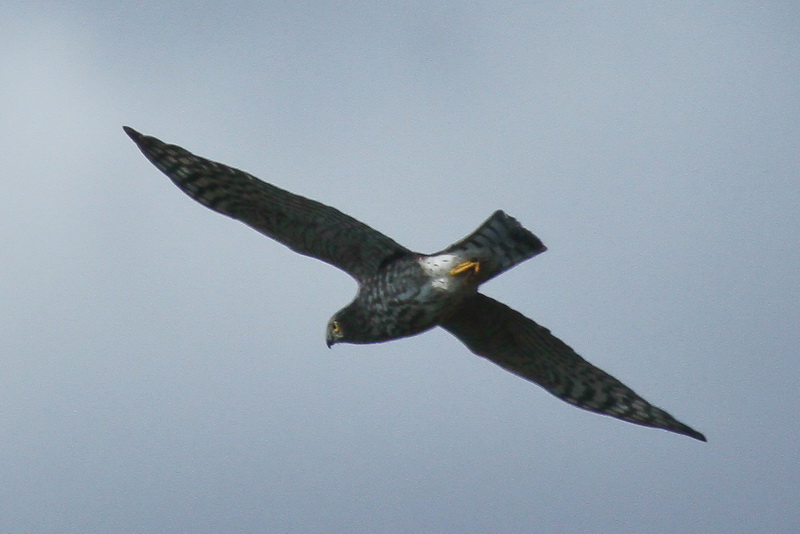
Meanwhile, Putney Mountain Hawk Watch has counted a site record for Broad-winged Hawk, Bald Eagle, Peregrine Falcon, and Osprey, and has an excellent flight for the other raptor species. A recent photographic sampling ...
When the hawks are not flying, and sometimes when they are, the Common Ravens of the neighborhood provide entertaining aerial shows.
Good Birding!
| Northern Flickers have been on the move |
... but for the first time I can remember, they visited the bird bird feeders, becoming a "new feeder bird" in my yard ...
| Flickers became a "new feeder bird" in my yard this Fall |
Pine Siskins, which have been widely reported throughout Vermont in the last few days, have been emptying my feeders on a daily basis for several weeks, and continue to do so.
| Pine Siskins fill the thistle feeder perches, while emptying the sunflower feeder daily |
Meanwhile, Putney Mountain Hawk Watch has counted a site record for Broad-winged Hawk, Bald Eagle, Peregrine Falcon, and Osprey, and has an excellent flight for the other raptor species. A recent photographic sampling ...
| Merlin |
| Red-tailed Hawk began their serious migration movement in October |
| Northern Goshawk |
When the hawks are not flying, and sometimes when they are, the Common Ravens of the neighborhood provide entertaining aerial shows.
| Common Raven |
Subscribe to:
Posts (Atom)