Showing posts with label Alexander Wilson. Show all posts

Saturday, February 05, 2011

Alexander Wilson and John James Audubon

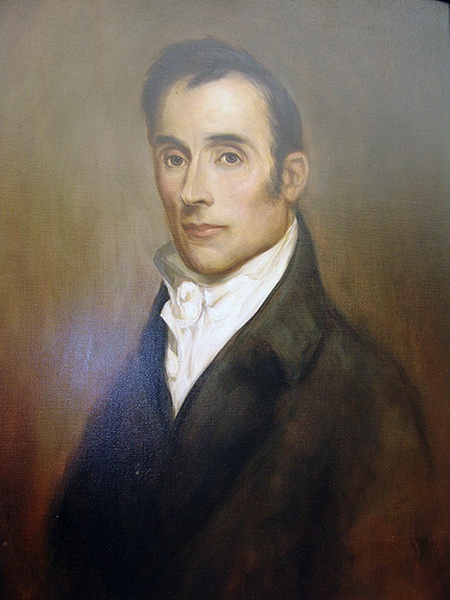
Alexander Wilson
Alexander Wilson immigrated to America from his native Scotland, a failed poet and political rabble-rouser. John James Audubon immigrated from France, sent to America by his father in order to avoid Napoleon’s draft. Wilson settled in Philadelphia. Audubon went to Millbrook outside of Philadelphia, an estate owned by his father. Wilson tried many jobs, none with much success. Audubon tried to be a merchant, consistently failing. Wilson managed to befriend prominent and well-to-do Philadelphians who encouraged his study of birds. Audubon gained entrance to many of Philadelphia’s prominent circles through his father. Wilson conceived his “American Ornithology” and gained the support of his prominent friends, even though he knew little about drawing and painting and was unable to identify many birds. Audubon preferred wandering the woodlands rather than being a merchant, collecting specimens, and painting watercolors of the birds he collected.

Wilson undertook long journeys throughout the eastern states and territories studying and drawing birds. Audubon traveled extensively throughout North America and the northern hemisphere studying and drawing birds. Wilson worked with an American printer, did his own engraving, traveled extensively to sell his work by subscription, and completed seven of nine volumes. He died prematurely, leaving volume eight to be published posthumously and volume nine to be written by a friend. Audubon went to England to publish his “Birds of America,” engaging a prominent London engraver. He sold his work by subscription. When the double elephant folio was complete, he published a smaller octavo edition, also sold personally by subscription. This seven volume work eventually was issued nine times.

Wilson is known as the father of American ornithology. Audubon is synonymous with birds throughout the world. Wilson was a poor draftsman and artist. Audubon was a talented and creative artist.

Wilson and Audubon shared the Philadelphia area as their home base, but their paths never intersected there. They met one time. Audubon was a merchant in Louisville, Kentucky, on his way to a business failure. Wilson’s journals from the time of their meeting in 1810 have been lost, though there are accounts written by Wilson’s friends who were also Audubon’s enemies. These tell of the two men meeting, and going hunting together for two days.

Audubon recounts the day when Wilson came into the counting room with two volumes of Ornithology under his arm. Wilson showed Audubon his work, and Audubon was ready to subscribe. Aubudon’s partner dissuaded him, telling Audubon (in French) that his drawings were far better than Wilson’s. Audubon did not subscribe and Wilson was miffed. Audubon showed Wilson his own portfolio which purportedly held almost two hundred paintings.

Audubon's "Small-headed Flycatcher"
According to Audubon, Wilson was relieved to learn that Audubon did not intend to publish his paintings. On the other hand, it may be that this meeting planted the idea in Audubon’s mind of publishing his work.

What is certain is that this single meeting led to a rivalry between the two men, a rivalry  which arose mainly after Wilson died in 1813. The rivalry revolved around charges and counter charges of plagiarism.

Wilson’s “American Ornithology” included a drawing of a “Small-headed Flycatcher.” Audubon claimed that Wilson copied from his drawing which he made in 1808. It is certainly possible that Audubon showed his drawing to Wilson in 1810, and Wilson, never having seen the bird and needing a record, made his own drawing based on Audubon’s. The “Small-headed Flycatcher” at the center of the controversy was an immature, warbler-like bird. Here’s the irony in the controversy. Today, nobody knows what the bird is. No one has seen or recognized the bird since Audubon - or Wilson - encountered it and drew it.

Wilson's "White-tailed Eagle" (Bald Eagle)
Audubon's "Bald Eagle"
The charge of plagiarism leveled by Audubon against Wilson had repercussions. Friends of Wilson came to his defense by pointing out that some of Audubon’s paintings were remarkably similar to some of Wilson’s painting.  “Why Audubon, an infinitely superior draftsman, should have been tempted to copy Wilson is mysterious, but the resemblance between his Bald Eagle, his Mississippi Kite, and his Red-winged Blackbirds and the indisputably prior drawing by Wilson of these species is beyond coincidence.” (Leahy, Birdwatcher’s Companion)

Scott Weidensaul in his history of American birding, “Of a Feather,” summarizes the quality of Audubon’s painting: “no one had ever brought such vitality, such raw emotion and surging power, to the painting of birds. Audubon smashed centuries of artistic convention, packing his birds among lovely vignettes or fully realized landscapes .... They were not generic, paste-board silhouettes, although Audubon drew a few of those, too, especially ones he lifted from Wilson.”

J.J.Audubon
One wonders what the results might have been if these two geniuses, one in ornithology, the other in painting, had managed to collaborate. In those days of slow travel and slow communication, the logistics of such theoretical collaboration are hard to imagine. Then there would have been ego; “no one held a higher opinion of Audubon than Audubon himself.” (Weidensaul) There is not much room in any room for one big ego, let alone two.

Wilson and Audubon are fascinating personalities who made pivotal contributions on the literal frontier of early nineteenth century America, and on the frontiers of science, natural history, painting, and learning in the robust and emerging culture of the New World.

Sunday, January 23, 2011

Airy Castles and Brain Windmills

Alexander Wilson said of himself: I am “long accustomed to the building of Airy Castles and brain Windmills.” He used those words to describe his lifelong quest to write verse that would do justice to the poetic tradition of his Scottish homeland and his older contemporary, Robert Burns. In 1790, when 24 years old, Alexander published a small volume of his poems and tried selling the collection while traveling as an itinerant peddler. Neither the book sales nor the poems were very successful, and life as a packman was difficult

The poet came from a family of weavers; his father also worked as a smuggler and operated an illegal distillery. Alexander wrote a libelous poem about a mill owner who was cheating his workers; he tried blackmailing the mill owner, got caught, and went to jail. More serious was his involvement with the Scottish unrest toward English rule, typified by the popular pub toast: “To George the Third and last.”

In 1794, young Alexander Wilson, age 28, had just enough money to book passage to America. One suspects the sheriff may have been near at hand. He landed at Newcastle, Delaware, and walked thirty miles to Philadelphia with his pack and his gun. According to the summary of a modern writer, he “shot the first bird he saw (by most accounts a red-headed woodpecker, a species he did not recognize), and in the days to come, he was struck by how much more colorful the birds of this new country appeared to be. His ornithological path, like the wagon road to Philadelphia, lay open before him ....” (Scott Weidensaul, “Of a Feather”)

Alexander Wilson, the young weaver, peddler, poet, blackmailer, and political rabble-rouser, began a whole new course in young America, although it took him a decade to find his focus. He tried printing, weaving, day labor, and peddling. He landed a job as a schoolteacher, but that seems to have ended when he had an affair with a married woman.

What he did manage to do was to establish relationships with some of the most prominent and educated men of Philadelphia, men who recognized talent, and who encouraged and mentored the young Scotsman. William Bartram was a naturalist, botanist, artist and writer. Charles Willson Peale was a prominent American artist. Samuel Bradford, editor of “Ree’s New Cyclopedia,” employed Wilson and eventually became Wilson’s publisher. George Ord of Philadelphia was a wealthy and influential naturalist who championed Wilson’s work.

Even with prominent supporters like this, Alexander Wilson showed audacious ambition. Somewhere around 1803 he got the idea of creating a book which would document all of America’s birds. The idea was audacious because “Wilson still didn’t know very much about American birds, even how to identify the majority of them.” (Weidensaul)

Wilson learned the birds. His “American Ornithology” was published in nine volumes between 1808 and 1814. The last two volumes were published after his death. In addition to learning his birds, Wilson also had to learn how to draw, paint, and engrave. When the first volume was published he again became an itinerant peddler, this time selling subscriptions to his work. He sold subscriptions to President Thomas Jefferson and the president of Dartmouth College, but in general there was no great rush to snap up copies.

Wilson spent months in the field, and sometimes the old poet reemerged. After a 1200 mile walk to Niagara Falls, he watched an eagle soaring above the falls. The poet emerged:

Now 'midst the pillared spray sublimely lost,
And now, emerging down the rapids tost,
Swept the gray eagles; gazing calm and slow,
On all the horrors of the gulf below.

He set off from Philadelphia in freezing weather for Pittsburgh, 250 miles away, then traveled down the Ohio River 700 miles by small boat, and another thousand miles by horse to New Orleans. On all journeys he collected specimens and made extensive notes.

Wilson’s “American Ornithology” described over 250 species out of an estimated 350 species that were present east of the Mississippi. Wilson had limitations as a draftsman and artist; some of his birds are hard to identify.

Carolina Parakeet and the 3 Wilsonia warblers
Alexander Wilson’s impact on ornithology was deep and lasting. The Wilson Ornithological Society, founded in 1902, commemorates the “father of American ornithology” and continues to promote the scientific study of birdlife. Five species continue to bear his name: a warbler, plover, phalarope, snipe, storm-petrel. The Genus Wilsonia includes the Hooded, Canada, and Wilson’s Warblers.

Wilson died of dysentery and/or tuberculosis in 1813 at the age of 47. Volume 8 was published after his death. Volume 9 was written by his friend George Ord. Charles Lucien Bonaparte, nephew of Napoleon I and an accomplished naturalist, spent eight years in America. Bonparte admired the work of Wilson. He added notes and commentaries to Wilson’s work and had “American Ornithology” republished three times after Wilson’s death.

In the preface to the second volume, Wilson provided the viewers of “American Ornithology” a brief insight into why he undertook such a project. Wilson wrote of himself: “...in ransacking our fields and forests, our sea shores, lakes, marshes and rivers; and in searching out and conversing with experienced and intelligent sportsmen and others on whose information he can venture to rely, he pledges himself, that no difficulty, fatigue or danger, shall deter him from endeavouring to collect information from every authentic source.”

Today, Alexander Wilson is nearly forgotten, while his contemporary and rival, John James Audubon, is synonymous with birds and birdwatching. There is more story to be told, as you can well imagine.

If Alexander Wilson had to be remembered only for the “Airy Castles and brain Windmills” which he crafted in verse, he would be just a blip in the passing of time. The color and variety of the birds in his new home took hold of his imagination. He joined with thousands of pioneers who were opening new frontiers. Wilson’s frontier was the study and description of birds, the science now known as ornithology.

Early on, Wilson sent President Thomas Jefferson some of his drawings. Jefferson, in turn, asked for Wilson’s help in identifying a bird. It was a Wood Thrush. Today many of us take for granted our ability to identify this woodland songster, by sight and by voice. We should thank Alexander Wilson. Wilson got us started in birdwatching.

Good birding!

LinkWithin

Related Posts with Thumbnails