Thursday, February 17, 2011

Nostalgic for Spring, 1

Winter drags on. The January thaw was a blip. The February thaw has reduced the snow pack in my back yard by about 6". Only 19" remain. The predictions call for a return to the deep freeze.

I am nostalgic for Spring. So I returned to a few images from the distant past - the long ago Spring of 2010 ...

... like a bluebird, a spot of deep blue sky, singing atop a snag ...

Eastern Bluebird
... or a goldfinch molting into his nuptial plumage, a yellow that will define the primary color ...

American Goldfinch
... or the primal pursuit in the open, but still cold, river waters of the drake merganser for the right to mate with a hen ...

Common Merganser
... and a robin busy with nest building, her pairing issue resolved.

American Robin
Good birding!

Monday, February 14, 2011

LBJs - Addendum

The Little Brown Job exercises which began in early December are at an end. There are many sparrows and other confusing brown birds which were not included, mainly because I do not encounter them very often. As I have watched, and studied, the LBJs which are in my neighborhoods, I find that I have gradually been able to identify them quickly. It is a skill which transfers to new areas, and new birds. When encountering an LBJ in a different part of the country, I can quickly eliminate many birds which it is NOT. The field is narrowed, and ID with field guide help can come quite quickly.

LBJs are not a mystery, unless you convince yourself that they are impossible to ID.

For example, in January, 09, we were in southern Arizona. I saw an especially plain little sparrow with no distinguishing marks; it was not difficult to ID Brewer's Sparrow

Brewer's Sparrow - near Tuscon, AZ

Brewster's Sparrow in desert brushy areas in winter defines drab bird.

Sparrows do not often provide clear, unmistakable field marks. The Black-throated Sparrow is a delightful exception. This one was photographed at a bird feeder in Patagonia State Park, Arizona, in January, 09. (Young birds are a bit more LBJ than adults.)


Black-throated Sparrow - Patagonia, AZ.
Also seen near Patagonia State Park in Arizona were these Rufous-winged Sparrows. With these birds, we were back in the true LBJ category. The first impression was that of a small flock of Chipping Sparrows. These birds were in mesquite shrub; they were secretive. Their cap was not quite right for a chipping, and they have pronounced "whiskers." So even though I never really saw the rufous wing, I was able to tick a life bird.

Rufous-winged Sparrow - Patagonia, AZ
When you are going after a well camouflaged bird, it helps to have help. At the Rio Grande Birding Festival in November, 09, I went on a field trip to King Ranch. The leaders knew where Sprague's Pipit was being seen. Walking a pickup truck track across a large grassy plain, they first heard the birds. Then one of these pipits worked along the track just ahead of the group I was with. This was a bird adapted to dry grassy areas!

Sprague's Pipit - King Ranch, TX
In mid-January, 2010, I photographed this American Pipit at Eastern Lighthouse Point near Gloucester, MA. Both pipits are bigger than the usual LBJs (namely sparrows), but neither will earn any awards for plumage brilliance. In winter this pipit typically "disappears" into grassy fields and mudflats, walking and bobbing its tail.

American Pipit - Gloucester, MA

Good birding!

Saturday, February 12, 2011

Pigeons - Pests

Common name: Rock Pigeon - formerly known as Rock Dove, popularly called “pigeon.”
Scientific name: Columba livia, in the Family, Columbidae.

The Rock Pigeon is an exotic species in North America. It did not naturally occur in North America but was introduced, probably by French colonists in Nova Scotia in the early seventeenth century and soon after by English colonists in Virginia and Massachusetts. It now lives wild nearly everywhere throughout North America. It is most familiar to people as the common city pigeon.

An adaptable bird and a prolific breeder, the Rock Pigeon has attained the unenviable status of pest in many of its town and city locations. This pest status has led to a multitude of creative and bizarre efforts to control its numbers.

I first met the Rock Pigeon’s pest status and the human effort to control it thirty-five years ago when I was living in Kittanning in western Pennsylvania. Located on the Allegheny River, the town was about the size of Brattleboro.

Kittanning had a pigeon problem, or at least, the pigeons were perceived as a problem. I attended meetings of the Board of Trustees of the Presbyterian Church, a stately, century old stone building situated on a downtown corner. The dour businessmen on the board were offended by the white pigeon droppings streaking the roof ridge, concerned about the effect of those acidic droppings on the church’s copper eaves, and the stone and mortar of the church’s exterior, and positively livid about the depth of the pigeon guano in the open bell tower. They also knew it was a town-wide problem, shared by the custodians of the county courthouse and the municipal buildings, and the owners of downtown commercial properties.

The town councilmen took action. They drew upon the deep rooted cultural resources of western Pennsylvania. Western Pennsylvania was settled by descendants of the Scottish covenanters. These Scots Presbyterians were religiously conservative, fiercely independent, deeply individualistic, and in constant feud with one another unless someone from the outside threatened them in anyway. Then they drew immediately together. Whether the threat came from pope, bishop, or king, they responded and took up their arms.

Drawing on this genetically transmitted cultural trait, the councilmen set aside their feuding, quickly concluded that the cost of cleaning up and repairing the damage of pooping pigeons was intolerable, and so issued a call to arms. On an appointed day and time, several dozen of the local tribesmen lined the banks of the Allegheny River, armed with shotguns, and ready for the bloodbath of a pigeon shoot.

The pigeons flew from the understructure of the bridge, and the guns blazed. A few pigeons dropped. The rest flew toward the safety of the downtown buildings where better sense dictated against the discharge of firearms. Blazing away with gunpower has been a frequent recourse to getting rid of all manner of pests. That day of pigeon shooting in a western Pennsylvania river town allowed a few to strut their hormonal toughness, but had no impact on the pigeon problem.

The Presbyterian trustees eschewed their covenanter heritage and took a more passivist approach. They considered poison-laced pigeon feed, but decided that dying birds on the church sidewalks might not present an aesthetically pleasing solution. At this distance in years, I don’t remember all the steps they took, except one. Concluding that they would never be rid of the pigeons, they decided to take a longer range approach and try to control the pigeons’ breeding. So they had the pigeon control consultant spread pigeon feed in the bell tower. The pigeon feed was treated with the pigeon equivalent of birth control pills. (Readers: please note my restraint from further comment about church sponsored birth control.)

Pigeon shoots and poison continue to be used occasionally against the pigeons, but in most places those actions are wisely prohibited. There is no registered birth control or sterility drug currently available. But there are many others anti-pigeon steps which are taken, some bizarre, some environmentally hazardous, some very expensive, and some remarkably cheap and effective. The website of the Urban Wildlife Society has information about all of these efforts and a wealth of information on Rock Pigeons.

The fact remains that pigeons, in genera, are not well-liked. I once asked someone where some others who were doing a bird count had gone. The reply was that they were downtown counting pigeons.  Behind the reply was a host of implications - why count pigeons because they don’t really count - real birders don’t count pigeons - pigeon counters are casual and lax about the serious business of birding ... and so on.

And I have a friend who refuses to list pigeons on his life list or as a species seen on any day of birding. When I insist that they have feathers, he snorts, points at his neighbors chickens and scoffs, “So do they.”

On the other hand, I know someone who loves the town pigeons. He keeps count from the beginning of winter to the end of winter, duly noting the decline in the pigeon numbers. His passion is hawks, and a good flock of pigeons means that a wintering Cooper’s, or Red-tailed Hawk will have a well-stocked pantry throughout the cold months. He not only counts the pigeons, but watches  as the flock takes flight, scanning the sky for a circling Red-tailed, or quickly checking the tree tops for a Cooper’s about to launch its attack.

I saw the importance of Brattleboro’s pigeons to wintering hawks a few years ago when I was driving north on Route 30 near the Retreat Meadows. On the ice was an adult Cooper's Hawk perched on top of a Rock Pigeon. Traces of blood were on the ice beneath the pigeon. The Cooper’s looked around warily, then took off without the pigeon. The Cooper’s had not reached her tree when an adult Red-tailed Hawk landed on the ice next to the pigeon. The Red-tail scanned the sky overhead, then climbed atop the pigeon's prone body. After a moment, the Red-tail took flight with the pigeon in its talons. The Cooper’s was going to have to hunt a second time on that day.

The Rock Pigeon is the recipient of much odium, and the victim of widespread prejudice. But the trouble with hatred and prejudice, is that they are almost always based on ignorance. We should also know that there are many people who are enamored of pigeons for various reasons. In future weeks, I will write more about the Rock Pigeon’s quite fascinating history and biology.

In the meantime, I would suggest that you do not automatically exclude the Rock Pigeon from your definition of Good Birding.

Thursday, February 10, 2011

Bohemian Waxwings

I was very excited about two weeks ago when a Bohemian Waxwing showed up in my backyard; the excitement was appropriate.

On Wednesday, Hector Galbraith and I followed a posting on VT Bird list serve of Bohemian Waxwings on the campus of Putney School. The reported 50 BOWAs exceeded all expectations. Hector's count was 250, though a few (but not many) Cedar Waxwings may have been mixed into that count.


What drew us to the campus in particular was the report of a Pine Warbler at the suet feeder outside of a classroom window. It was till present, resting on a window sill under the protective drip edge of a window. Not much of a picture, but another documentation of a bird that has no business trying to cope with a Vermont winter.

Pine Warbler
Good birding!

Wednesday, February 09, 2011

Not the Face That Launched a 1000 Ships

... well maybe that's not fair. She is undoubtedly attractive to a turkey tom.


A couple of turkey flocks - 4 and 12 respectively - (also known as posse or raffle) have been regular at the feeders. As near as I can tell, they are all hens. In the previous picture, note the tan tipped feathers on the breast. The breast feathers of the tom are tipped black.

The turkeys are very skittish, sensing any inside movement. They were a little less so when I crawled to an upstairs window and looked down on them.


In the kitchen, I stood well back from the window. The scene outside was chaotic, especially given the size of these birds, as they competed for the best feeding position at the platform feeder, or on the ground.


When I got close to the window, they spooked and flew.


Good birding!

Monday, February 07, 2011

February Thaw & Tropical Respite

Yesterday I heard someone claim that there was the proverbial "January Thaw" during the first day or two of the year. I missed it. But yesterday we did have a "February Thaw" with the temperature reaching 40degrees (4 C). The ice on the front walk melted, but there was no perceivable change in the height of the canyon walls leading to our kitchen door.

Today the thaw seems to be continuing - its 37 (3 C), and the platform feeder in the back is not higher that the surrounding snow pack by a few inches.

Basically, the world remains white, with grays and blacks.

So here are questions for the psychologists (real or wannabe) out there: With so little color in my current world, why am I compelled to post black and white birds from last year's March trip to tropical Trinidad? Is it memory of warm climes, jungles and marshes? Green backgrounds? Or some perverse fixation on winter that simultaneously smug about being tough enough for a New England winter and so weary of it that a world of color is a world away?

Whatever ... a few birds from Trinidad ...

Smooth-billed Ani
White-headed Marsh Tyrant
Greyish Saltator
Pied Water Tyrant
Good birding!

Sunday, February 06, 2011

Mississippi Kite - Wilson - Alexander

In the previous post, I wrote about the charge brought by Audubon that Wilson had "copied" Audubon's Small-headed Flycatcher. Later this month, we will have the opportunity to compare the two paintings.

Wilson's friends counter charged that Audubon was "inspired' (my word) by several of Wilson's paintings. The previous post has illustrations of the Bald Eagle by both Wilson and Audubon. Wilson's painting is without question the earlier painting.

Audubon's Mississippi Kite was cited as another example of Audubon being "inspired" by Wilson. Again, Wilson's painting is definitely the earlier painting. Here are the two illustrations. What do you think? Did Audubon copy Wilson?

Wilson's Mississippi Kite

Audubon's Mississippi Kite

Saturday, February 05, 2011

Alexander Wilson and John James Audubon

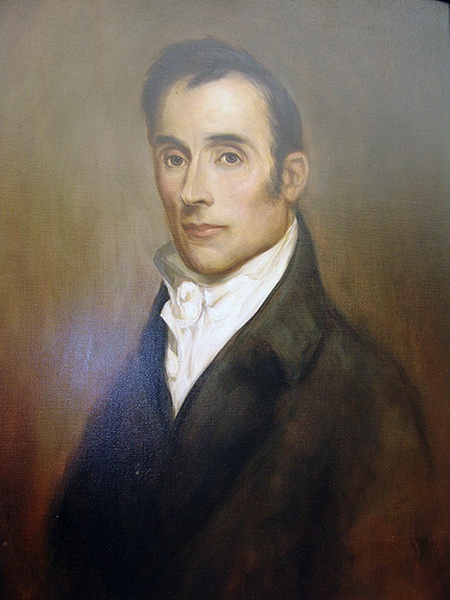
Alexander Wilson
Alexander Wilson immigrated to America from his native Scotland, a failed poet and political rabble-rouser. John James Audubon immigrated from France, sent to America by his father in order to avoid Napoleon’s draft. Wilson settled in Philadelphia. Audubon went to Millbrook outside of Philadelphia, an estate owned by his father. Wilson tried many jobs, none with much success. Audubon tried to be a merchant, consistently failing. Wilson managed to befriend prominent and well-to-do Philadelphians who encouraged his study of birds. Audubon gained entrance to many of Philadelphia’s prominent circles through his father. Wilson conceived his “American Ornithology” and gained the support of his prominent friends, even though he knew little about drawing and painting and was unable to identify many birds. Audubon preferred wandering the woodlands rather than being a merchant, collecting specimens, and painting watercolors of the birds he collected.

Wilson undertook long journeys throughout the eastern states and territories studying and drawing birds. Audubon traveled extensively throughout North America and the northern hemisphere studying and drawing birds. Wilson worked with an American printer, did his own engraving, traveled extensively to sell his work by subscription, and completed seven of nine volumes. He died prematurely, leaving volume eight to be published posthumously and volume nine to be written by a friend. Audubon went to England to publish his “Birds of America,” engaging a prominent London engraver. He sold his work by subscription. When the double elephant folio was complete, he published a smaller octavo edition, also sold personally by subscription. This seven volume work eventually was issued nine times.

Wilson is known as the father of American ornithology. Audubon is synonymous with birds throughout the world. Wilson was a poor draftsman and artist. Audubon was a talented and creative artist.

Wilson and Audubon shared the Philadelphia area as their home base, but their paths never intersected there. They met one time. Audubon was a merchant in Louisville, Kentucky, on his way to a business failure. Wilson’s journals from the time of their meeting in 1810 have been lost, though there are accounts written by Wilson’s friends who were also Audubon’s enemies. These tell of the two men meeting, and going hunting together for two days.

Audubon recounts the day when Wilson came into the counting room with two volumes of Ornithology under his arm. Wilson showed Audubon his work, and Audubon was ready to subscribe. Aubudon’s partner dissuaded him, telling Audubon (in French) that his drawings were far better than Wilson’s. Audubon did not subscribe and Wilson was miffed. Audubon showed Wilson his own portfolio which purportedly held almost two hundred paintings.

Audubon's "Small-headed Flycatcher"
According to Audubon, Wilson was relieved to learn that Audubon did not intend to publish his paintings. On the other hand, it may be that this meeting planted the idea in Audubon’s mind of publishing his work.

What is certain is that this single meeting led to a rivalry between the two men, a rivalry  which arose mainly after Wilson died in 1813. The rivalry revolved around charges and counter charges of plagiarism.

Wilson’s “American Ornithology” included a drawing of a “Small-headed Flycatcher.” Audubon claimed that Wilson copied from his drawing which he made in 1808. It is certainly possible that Audubon showed his drawing to Wilson in 1810, and Wilson, never having seen the bird and needing a record, made his own drawing based on Audubon’s. The “Small-headed Flycatcher” at the center of the controversy was an immature, warbler-like bird. Here’s the irony in the controversy. Today, nobody knows what the bird is. No one has seen or recognized the bird since Audubon - or Wilson - encountered it and drew it.

Wilson's "White-tailed Eagle" (Bald Eagle)
Audubon's "Bald Eagle"
The charge of plagiarism leveled by Audubon against Wilson had repercussions. Friends of Wilson came to his defense by pointing out that some of Audubon’s paintings were remarkably similar to some of Wilson’s painting.  “Why Audubon, an infinitely superior draftsman, should have been tempted to copy Wilson is mysterious, but the resemblance between his Bald Eagle, his Mississippi Kite, and his Red-winged Blackbirds and the indisputably prior drawing by Wilson of these species is beyond coincidence.” (Leahy, Birdwatcher’s Companion)

Scott Weidensaul in his history of American birding, “Of a Feather,” summarizes the quality of Audubon’s painting: “no one had ever brought such vitality, such raw emotion and surging power, to the painting of birds. Audubon smashed centuries of artistic convention, packing his birds among lovely vignettes or fully realized landscapes .... They were not generic, paste-board silhouettes, although Audubon drew a few of those, too, especially ones he lifted from Wilson.”

J.J.Audubon
One wonders what the results might have been if these two geniuses, one in ornithology, the other in painting, had managed to collaborate. In those days of slow travel and slow communication, the logistics of such theoretical collaboration are hard to imagine. Then there would have been ego; “no one held a higher opinion of Audubon than Audubon himself.” (Weidensaul) There is not much room in any room for one big ego, let alone two.

Wilson and Audubon are fascinating personalities who made pivotal contributions on the literal frontier of early nineteenth century America, and on the frontiers of science, natural history, painting, and learning in the robust and emerging culture of the New World.

Wednesday, February 02, 2011

No Respite from Winter

Alas, the whole of the United States seems to be reeling from one storm after another. For all of the anticipation heaped up by the media, when it finally reached us here in Vermont it was not too bad - about 10 inches (25cm), with some mixture late of sleet and freezing rain. The snow pack in the back yard is now 30 inches (75 cm).

The storm may not have been too bad for us, but I am getting tired of winter.

After the big flock moved through a few days ago, four Wild Turkeys are continuing in the near vicinity.


While eating lunch, I saw big black things high in the willow tree. We don't think of turkeys as flying machines, but they are quite adept.


The winter finches have moved elsewhere - no grosbeaks, redpolls, siskins. But the neighborhood residents are still present, including at least five cardinals ... and a Red-breasted Nuthatch returned briefly to the suet.

Northern Cardinal, female

Northern Cardinal, male

Red-breasted Nuthatch

Tuesday, February 01, 2011

Visual Respite from Winter - 2

Two storms pending - accentuating the need for color. So here is another visual respite from winter from last year's March trip to Trinidad

Blue-grey Tanager

Amazonian White-tailed Trogon
And finally ... I don't know what this flowering shrub is, but it is colorful, and in my neighborhood, it is still weeks (maybe a couple of months) before the first crocus and snow drops will appear in the yard ...


LinkWithin

Related Posts with Thumbnails