Showing posts with label Blue Jay. Show all posts

Monday, May 16, 2016

Backyard Birding

The backyard has been very busy in the last couple of weeks. This is just a sample, beginning with the four pair of Evening Grosbeaks and three pair of Rose-breasted Grosbeaks ...

Evening Grosbeak (male)

Evening Grosbeak (male)
Evening Grosbeak (male) with Brown-headed Cowbird (male)

Rose-breasted Grosbeak (male)

Rose-breasted Grosbeak (male)

Rose-breasted Grosbeak (male) and Evening Grosbeak (male)
If the Blue Jay was a rare bird, we would fall over ourselves in admiration of its beauty, but they are common, noisy, and perceived as bullies - though in actuality, no worse than any of the other birds at the feeders who will chase off other birds to get their favored seeds. I love the jays - raucous rogues that they are ...

Blue Jay
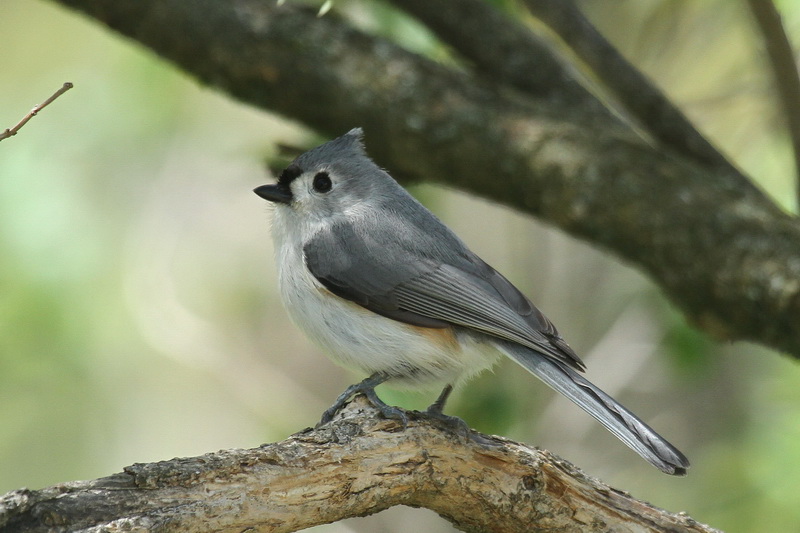
Year round birds accustomed to our presence and almost pets, are the Tufted Titmouse and Black-capped Chickadee. This one came to the rock five feet from where I was sitting to grab a hunk of suet that had fallen from the eave feeder ...

Tufted Titmouse

Black-capped Chickadee
The Red-bellied Woodpecker has been in the neighborhood for about seven years. Unlike the Downy and Hairy which wait for me to put out the suet in the morning, the Red-bellies are still wary and shy, but eagerly come to the suet and feeders and always provide stunning entertainment ...

Red-bellied Woodpecker (male)

Red-bellied Woodpecker (male)
GOOD BIRDING !!!

Thursday, September 26, 2013

Random Images from a Hawk Watch

When the Broad-winged Hawk migration over Putney Mountain concludes, somewhere around the September 20-23, there is usually a lull until other species begin moving seriously around October 1. But there are always a few stalwart watches who make sure that those slow days are covered, and the few birds counted, and  just in case ....

But most of the action takes places other than in the skies overhead. Here are a few random images from Putney Mountain during the last few days ...

Hermit Thrush
Whittling away the watch hours


Migrating Blue Jays often pass overhead in significant numbers

School groups visit Putney Mountain, and sometimes serenade the watchers
Northern Flicker migration has begun
Golden-crowned Kinglet

Good Birding - wherever you may be!

Thursday, September 13, 2012

Flight of the Broadies - Putney Mtn

Wednesday, September 12, was a banner day for Broad-winged Hawk flight on Putney Mountain with over 1400 birds having been counted by the time I had to leave at 4:00pm.

Kettles of 20 t0 250 birds rose out of the Connecticut River Valley. The birds were often just distant the specks, but their numbers made it look as if Zeus sprinkling pepper from a pepper shaker, spicing up his afternoon meal, and certainly spicing the sky for the hawk watchers.

A few Broad-wings even came over at eye level. Blue sky and bright sun then provided some good photo opportunities ...

Broad-winged Hawk - juvenile

Broad-winged Hawk - juvenile

Broad-winged Hawk - adult

Broad-winged Hawk - adult
Mid-afternoon, eagles drifted lazily over the ridge (eagles plural!). An adult and two sub-adult Bald Eagles dwarfed the circling Broadies nearby ...

Bald Eagle - adult

Bald Eagle (2nd year)
Turkey Vultures wander up and down the ridge, but it is much too early for them to be counted. This one drifted over the ridge, occasionally doing a lazy wing adjustment and providing a different view of this familiar big black bird ...

Turkey Vulture - juvenile
Putney Mountain Hawk Watch also counts Blue Jays, in part because they move early before the hawks have taken to the wing ...

Blue Jay
A day of superb birding! Hope you have a good one today!

Tuesday, August 28, 2012

The Challenges Faced by Breeding Birds

The breeding season for the birds is just about over. In my yard it has been a successful and entertaining season, with a succession of young birds being fed in the trees and bushes, and around the feeders. But what I see in my yard is just a fraction of the activity, challenges, and drama of the breeding birds.

American Robin with two fledglings
As an example, let’s begin with a few dry facts about the American Robin.  The male and female build a cup nest from scratch. Typically four eggs are laid and are incubated by the female for two weeks. The young are fed in the nest for two weeks and are then fed by both parents as fledglings. A pair of robins will raise two or three broods each year.

Now consider: if every egg hatches and every hatchling fledges and every fledgling survives, this would mean that a single pair of robins would add eight to twelve new robins to the robin population in a single year. If all robins were similarly successful, the robin population would increase on average five times in one breeding season. Clearly, we would soon be overrun with robins.

Rose-breasted Grosbeak fledgling flutters and calls for food
But that degree of nesting success rarely occurs. The eggs and the nestlings of birds are threatened by many predators: weasels, raccoons, red squirrels, snakes, jays, crows, hawks, and owls (to name just a few). And don’t forget your house cat among the predators. Birds are hosts to many parasites; bird-lice, fleas, louse flies, ticks, and mites all dine on the birds and their young. Storms can damage nests. If the nest has been built anywhere near humans, deliberate or inadvertent disturbance may occur. Once the young are out of the nest, the dangers increase. Young birds are squawking and fluttering to attract the attention of their parents so that they can be fed, but this may also attract the attention of all of those nest predators and more.

Food supplies effect the ability of birds to successfully raise young. A few years ago, cuckoos were common in our area, in conjunction with a variety of caterpillars chewing up the leaves of the trees. Several years ago, our yards were overrun with chipmunks. That same summer, Barred Owls had remarkable success in raising their young. But then came the winter when the food disappeared beneath the snow pack and the young owls were unable to feed themselves. A few were found and taken to wildlife rehabilitation centers; the others perished. This summer has been another banner year for chipmunks, and probably for owls and hawks as well. What will happen to those young if the coming winter is typically harsh?

The likelihood that a nesting pair of birds will successfully hatch and raise a full clutch is quite low: an egg may not hatch, a nestling may be out-competed for food by its nest mates, a fledgling may be too quiet or too weak to attract a parent with food or simply get too far away from its parents. Cornell Lab or Ornithology has citizen scientists doing nest box studies. For the Eastern Bluebird, for example, nesting success is about 72%; this is the percentage of nests that produce at least one fledgling.

Tufted Titmouse juvenile
When I see young birds being fed around my feeders or in the trees around my home, I am seeing young that have already beaten many odds, but who still have many long odds still to overcome. In mid-July, I was entertained by a pair Evening Grosbeaks. One was the mother; the other  a youngster. He was constantly calling for her. When she fed him and flew off, he followed her noisily. Eventually, he followed her to the bird feeder, where she ate and occasionally fed him. Bit by bit, he got the idea that he could get food on his own, although he gave up mom’s service only reluctantly.

The next day, the young grosbeak was at the feeder by himself and feeding himself, endlessly scarfing down seed and even chasing off other, sometimes larger, birds. But he had no sense of fear. I approached to within three feet and felt as though I could have picked him up, he was so tame - or perhaps, clueless. Instead, I clapped my hands and shouted. This finally induced him to fly off. Young Downy Woodpeckers on the suet feeder also show a cluelessness to danger, so I’ve taken to chasing them off as well in an attempt to teach a bit of wariness.

They need wariness, as the pile of dove feathers on the back lawn one morning testified. Probably a young Mourning Dove roosted on the tree branch too long, and became a meal for a hawk or owl. But in doing so, that dove fulfilled its life purpose; it became a part of the food chain.

Therein is a truth that is an unpleasant one for many people. We look on the birds at our feeders as entertainment, cute bundles of energy and activity. We give them human attributes. The titmice are sweet, the chickadees acrobatic, and the nuthatches comic. The crows are noisy and the jays are greedy bullies. But they are all “our” birds.

Blue Jay juvenile
Watch all of them more closely. Once the young are cut free from parental dependence, the birds may occasionally cooperate in alerting others to danger, as when a hawk is perched in a nearby tree. They may travel in flocks, communicating with one another about  food sources, and benefitting from safety in numbers. But they are also competing with one another for food, regardless of how full the feeders may be or how laden with fruit the bushes are. One bird chases off another bird - its own kind and other kinds - as though the food supply might suddenly run out.

The life expectancy of small birds is not long. Occasionally a song bird may live 5 to 10 years. The host of dangers and challenges facing small birds probably means that few ever “die of old age,” though old age may eventually weaken them or slow them so that they succumb to one of the dangers or challenges. Some studies suggest that only 20% of the birds which are successfully raised during a breeding season survive to the second year, while 80% of the adults survive to the following year. Clearly, mortality among small birds is very high.

Early this month, I was entertained by a young Chipping Sparrow which begged from a Song Sparrow, then begged from another young Chipping Sparrow, and eventually was fed by a parent. I am amused by the demanding calls of the young Blue Jays; they seem like the noisiest, most obnoxious juveniles imaginable. I am taken by the simple naivete of the young birds and wish them well even as I try to teach them a few lessons about getting on in the world.

Male Downy Woodpecker feeds his fledgling son
But then I consider the realities behind my entertainment. The cycles of nature are not there for my amusement. They are serious business for the life involved. I may occasionally cite dry facts about common breeding birds, but those dry facts point to the larger challenge which each species and its individuals face in the cycle of life.

Tuesday, July 24, 2012

The Hot Days of July

The lazy, hazy summer days of July bring plenty of entertainment as fledglings are fed and juveniles begin to figure out what life requires without mom and dad catering their needs.

Among the many juveniles in the last week is the Tufted Titmouse ...

Tufted Titmouse - juveniles
 American Goldfinch young do not have signs quite as obvious as other birds that identify the young (e.g. the pink at the base of the bill). But there has been lots of "chasing" going on, as young follow adults. This young bird did some wing fluttering and generally appeared a bit perplexed about everything ...

American Goldfinch - juvenile
Even young Blue Jays have an attitude that seems to say, "Well, I can figure this out!" - as did this young jay who studied the suet feeder from the nearby dogwood ...

Blue Jay - juvenile
... and then took a lesson from the topsy-turvy nuthatches to feed on the suet ...

Young Blue Jay feeds in nuthatch fashion
Evening Grosbeak families have had a very successful season and the young birds often outnumber the adults at the feeders. This youngster was even chasing off adult birds from his perch ...

Evening Grosbeak - juvenile
The bee-balm is in full bloom (early it seems), but no complaint from the many young Ruby-throated Hummingbirds working the flower beds ...

Ruby-throated Hummingbird
... the complaints come from the resident male Ruby-throat, who simply cannot keep up with all of the intruders on his exclusive domain. After several territorial flights to chase off these upstarts, he took this breather. He seemed to express his displeasure at the invaders - and the photographer - by sticking his tongue out ...

Ruby-throated Hummingbird
A bonus to the summer bird seeding is the sunflower seeds that have been scattered on the ground - a few have managed to sprout and thrive, providing bright spots of sunshine in unexpected places ...

Add caption

Tuesday, June 26, 2012

The Next Generation

For the last few weeks, Blue Jays have been "uncharacteristically" quiet as they come to the feeders, gather seeds, and leave. They have been nest building, incubating, and feeding nestlings. They are intelligent corvids, and they know not to draw attention to themselves during this vulnerable time. I have been waiting for the jolly raucousness to return, along with fledglings demanding to be fed. That happened this morning, as young swarmed through the trees, begging loudly and and chasing after parents when they did not get their way immediately ...

Fledgling Blue Jay begs for food
 The first fledgling Evening Grosbeak was fed in our backyard on June 9 ...

Evening Grosbeak - juvenile

... since that day, the young have been brought around for food and self-feeding instruction on a regular basis ...

"Hey Dad, is this where I get the food?"

Additional members of the Next Generation which we have helped to raise include ...

Downy Woodpecker ...

Mrs. Downy (the frazzled one in the back) feeds her daughter

Mr. Downy feeds his son
Hairy Woodpecker ...

Hairy Woodpecker - juvenile male
Red-bellied Woodpecker ...

A "shy" Red-bellied Woodpecker - he/she would not look at the camera
Common Grackle ...


Fledgling Common Grackle - one of many!
... and finally ... the Cedar Waxwings are getting down to the business of the season. This pair copulated on the branch while I went for my camera. When I finally focused on them, they had happy smiles, then flew off.

Cedar Waxwings
Good birding!!


LinkWithin

Related Posts with Thumbnails